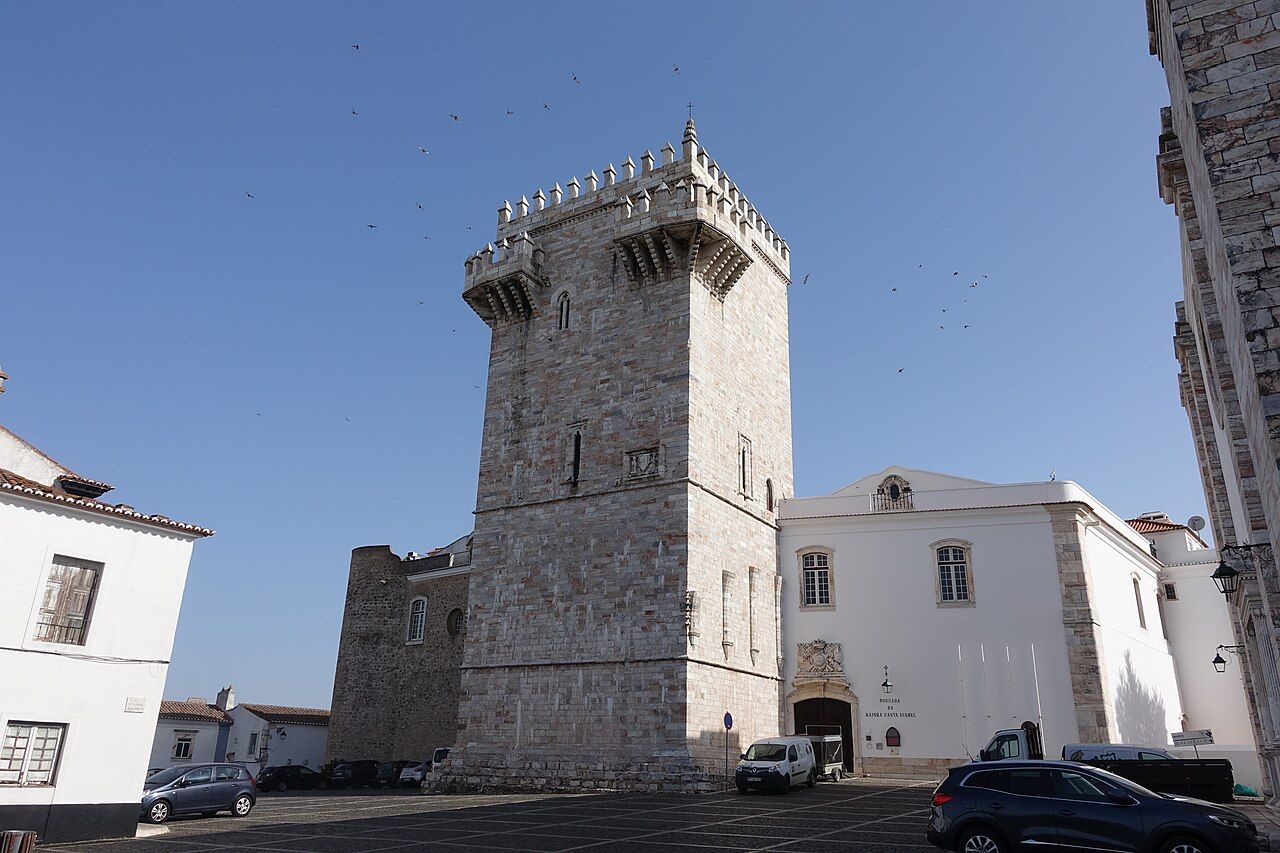
I have a habit of counting steps when a town keeps drawing my eye upwards. In Estremoz, the upper quarter is enclosed by medieval walls around a castle, and the white marble keep rises above the town. It is a satisfying arrangement: the high, walled quarter and the broad lower town belong to the same place, but they make different impressions.
Questions about Estremoz
What is the Tower of the Three Crowns?
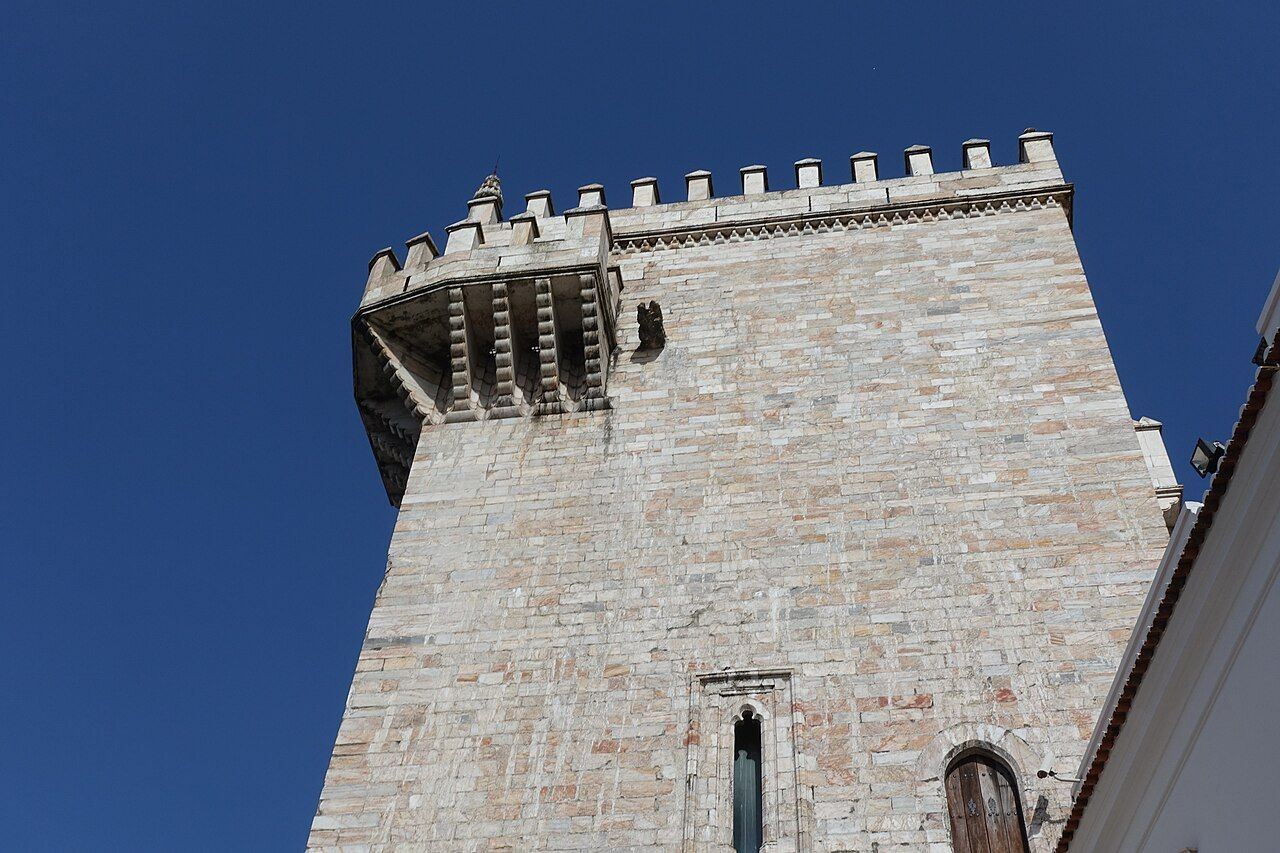
The Torre das Três Coroas is the castle keep, built largely of white marble. Its name, the Tower of the Three Crowns, is said to recall the three kings who reigned while it was being built. I like that the name points to a stretch of royal history without turning the tower into a puzzle that needs solving. The marble is the more immediate fact: this is a keep that belongs unmistakably to a town on the marble belt.
Why is Queen Isabel remembered here?
Queen Isabel of Aragon, wife of King Dinis, died in Estremoz castle in 1336. She was later made a saint and is known in Portugal as the Rainha Santa Isabel. The Chapel of the Rainha Santa Isabel, inside the castle, is decorated with azulejo tiles telling her story. That gives the upper town a focus beyond walls and views; the chapel’s tiles keep the story close to the place where she died.
How do the upper and lower towns fit together?
The upper quarter occupies the high ground around the castle, while the lower town spreads around the huge open square, the Rossio Marquês de Pombal. From the top of the keep, the view stretches over the lower town and the plains around it. I prefer seeing the two parts in relation to one another from above: the castle is not the whole of Estremoz, and the square is not an afterthought below it. Each gives the other its scale.
The lower town had its own defences, enclosed by bastioned walls in the 17th century during the Restoration War. So the town’s shape is not simply a medieval upper quarter with a later sprawl attached. There are two layers of fortification, and the open square makes a good counterweight to the enclosed height of the castle.
What else gives the town its character?
Estremoz lies on the marble belt, and quarries surround the town. That makes the keep’s white marble feel less like a decorative flourish and more like a direct expression of the landscape around it.
I would give the castle and its chapel more attention than a quick look at the tower alone; the tiles and the view add different things, and neither is a substitute for the other.
The Battle of Ameixial was fought near Estremoz in 1663. It is another reminder that the town’s walls and position are tied to more than a single period of history. For a smaller, everyday counterpoint, the Saturday market belongs in the picture too: the lower town is not merely the view from the keep, but a place centred on a huge square.
My preference is for Estremoz as a pair of towns, not just a castle on a hill.
Photos by GualdimG, CC BY-SA 4.0