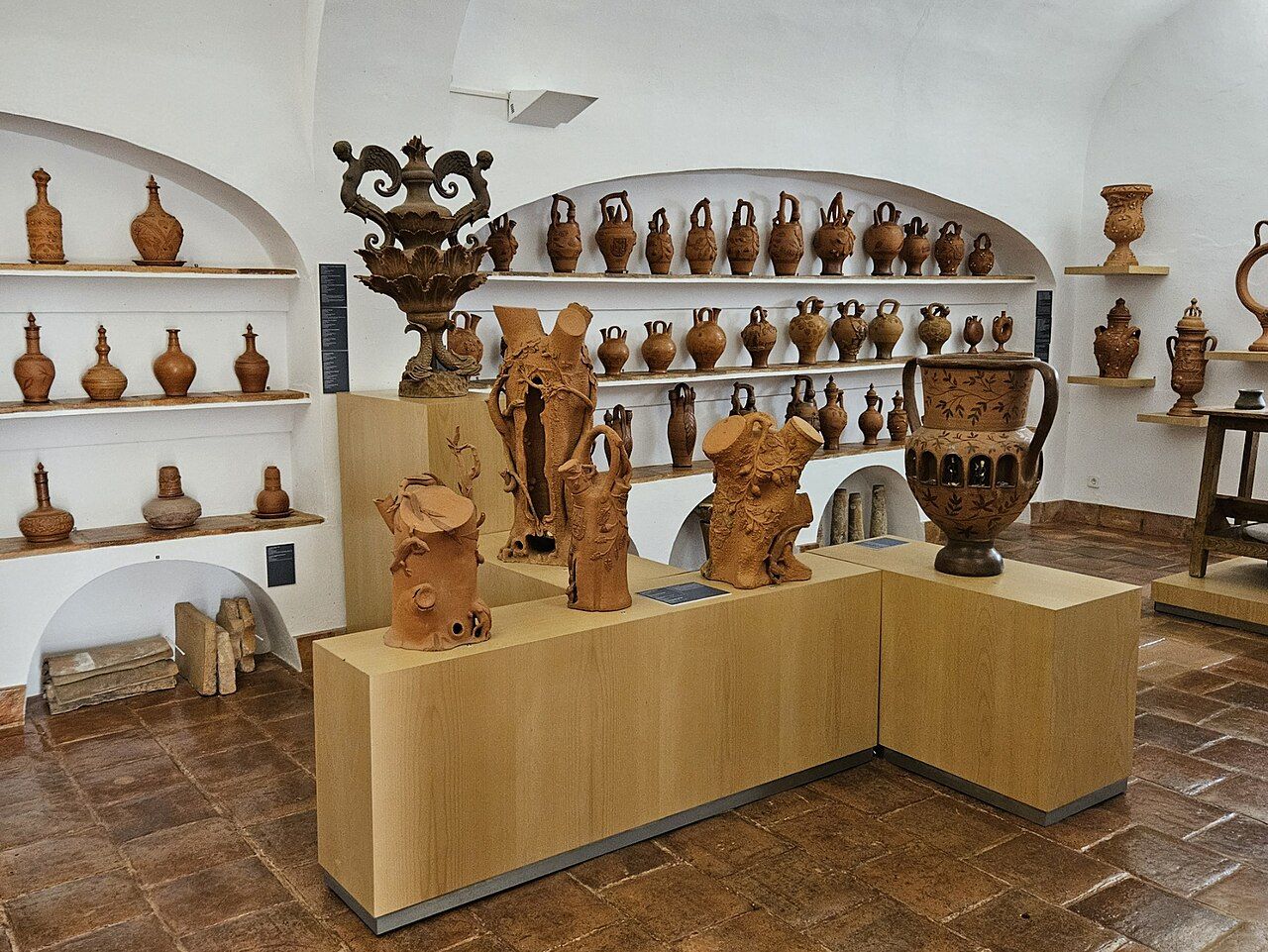
“Bonecos de Estremoz.”
What are the Bonecos de Estremoz?
They are small painted clay figures, made in Estremoz for centuries. Every one is small enough to stand in the palm of a hand. I like that scale: these are figures to look at closely, not grand objects that ask to be admired from a distance. In 2017, UNESCO added the craft of making Estremoz clay figures to its register of humanity’s cultural traditions. That recognition gives the work a formal place, but the figures themselves remain wonderfully direct: clay, colour and a subject you can name.
What do they show?
The range runs from saints and nativity scenes to farm workers, soldiers and musicians, with scenes of country life among the subjects too. The Primavera is a well-known figure: a woman in a flowered dress who stands for spring. I’m especially fond of the way one small object can carry an idea as broad as a season. The figures don’t need a complicated explanation; their subjects are there to be read in the painted details. For another kind of handmade work, I also keep the potters of São Pedro do Corval in mind.
How are they made?
Each figure is modelled by hand, fired, then painted in bright colours. There is a pleasing plainness to that sequence, and a real difference between knowing the steps and looking at the finished piece. The small scale makes the handwork feel all the more present. I prefer that to anything overworked: a figure can be vivid without needing to be large or elaborate. The paint brings out the subject, whether that is a musician, a saint or a worker in the countryside.
Where can I see them?
The Municipal Museum of Estremoz holds a large collection, so it is the clearest place to look across the figures and their subjects together. Workshops in the town still make them, and they are sold at the Saturday market. I like that the story does not stop at a museum display: the craft is still being made in Estremoz. Nativity sets, known as presépios, are among the most common pieces, and make a good starting point if the different subjects feel like a lot to take in.
I’d choose the Primavera: a whole spring, held in a palm.
Photos by Vitor Oliveira from Torres Vedras, PORTUGAL, CC BY-SA 2.0