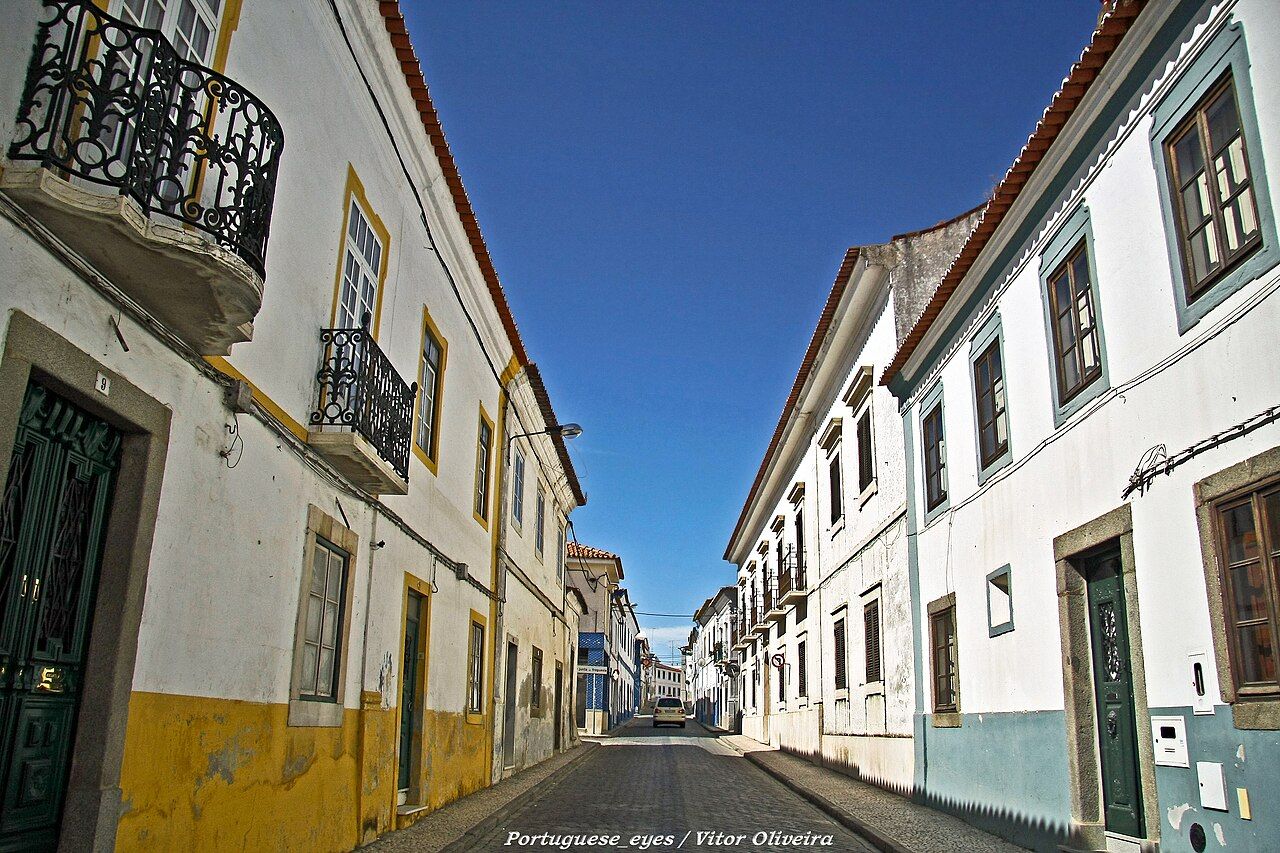
“Every few years” is a good phrase to begin with. Redondo’s Ruas Floridas festival belongs to the town, not to a permanent display: residents decorate the streets with paper flowers, and every street chooses its own theme. I like that the making takes many months. It gives the festival a sense of shared effort, rather than the feel of a decoration put up for passing attention.
What happens at Ruas Floridas?
When the festival is held, the streets are dressed in paper flowers. The decorations are made by hand over many months, with each street choosing its own theme. That small detail is what catches me: the streets do not simply repeat one another. Ruas Floridas sounds less like a single grand gesture than a collection of decisions, made together and carried through patiently. The town’s white streets slope gently below the old walled core, so the setting is already pleasingly legible; the paper flowers add a different sort of mark, temporary and made by hand.
What is Redondo known for besides flowers?
Pottery is the other answer, and it deserves equal billing. Redondo has a long tradition of it, with workshops making brightly painted plates, jugs and bowls. I prefer that kind of craft to a souvenir whose only argument is that it travelled a long way to get here. The colour and decoration make the pottery feel specific to Redondo, while the everyday forms keep it grounded. Plates, jugs, bowls: useful things, and not improved by pretending they are too precious to use.
What is the connection with wine?
Redondo gives its name to one of the eight sub-regions of the DOC Alentejo wine appellation. There is also a longer, more particular connection in the clay pots called talhas, which were long used here to make and store wine. I like the idea of a place where clay is not only shaped into painted bowls and jugs, but has also been part of the work of wine. wine made in clay pots gives Redondo’s pottery tradition another layer; this is not just a town with a craft beside it, but one where the material has had more than one purpose.
What is there in the old town?
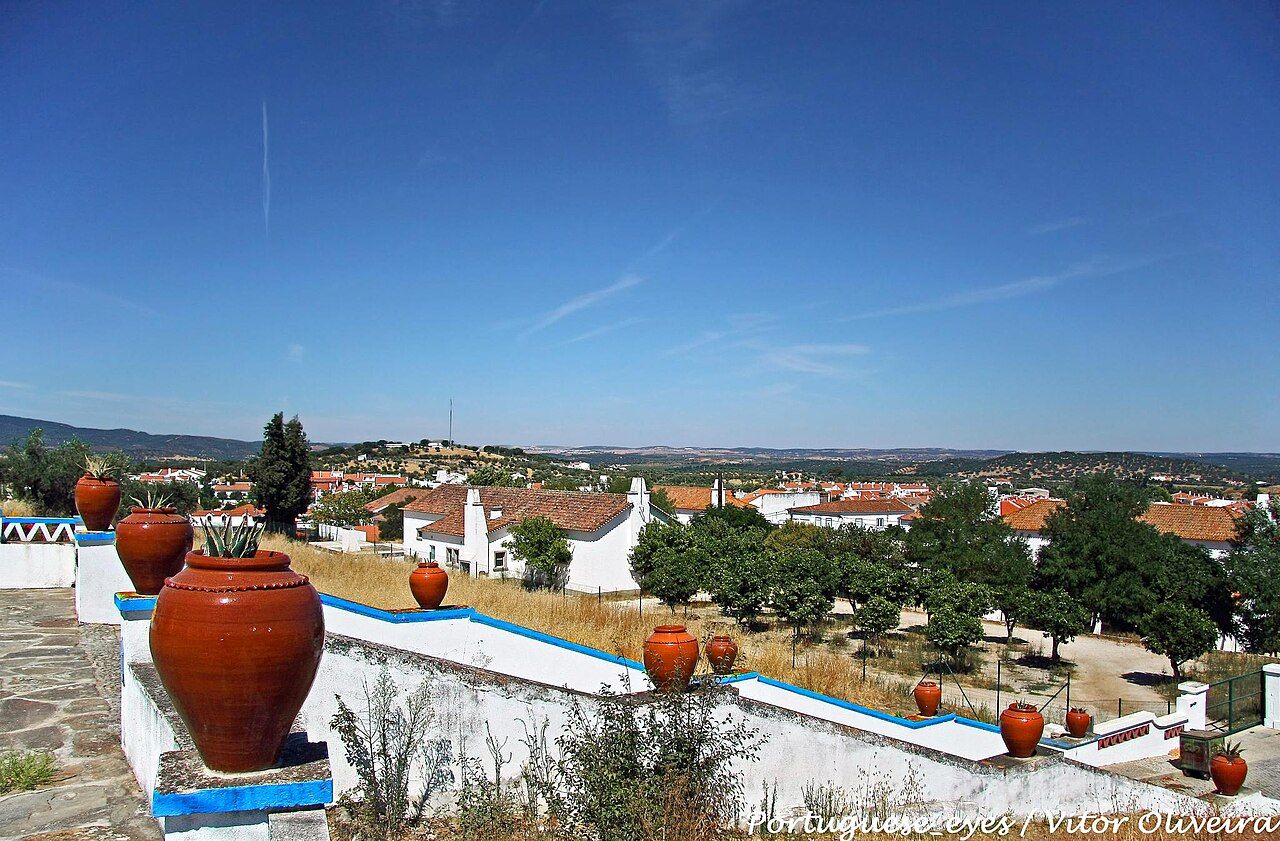
The old town keeps two medieval gates, the Porta da Ravessa and the Porta do Postigo. Redondo’s castle dates from the reign of King Dinis, and the white streets slope gently below the old walled core. I would give the gates and castle their due, then let the streets do the quieter work. They make the old centre feel like part of the town rather than a separate attraction to tick off. There is enough to notice without dressing every stone in a grand explanation.
Where does Redondo sit?
Redondo is a small town south-west of Borba, at the foot of the Serra d'Ossa. The range rises north of the town, its slopes covered in cork oak, eucalyptus and pine. For the setting, the hills of the Serra d'Ossa are not a distant backdrop but part of the town’s immediate geography. Redondo brings together a plain-spoken set of pleasures: painted pottery, wine, an old walled core and streets that occasionally turn into paper flowers. I would put the pottery and Ruas Floridas first, with the gates close behind.
What should I remember?
That Redondo is more than one thing. The festival has its own rhythm, the pottery is made in workshops, and the wine connection runs through both the DOC sub-region and the history of talhas. Those details are better company than a long list of things to do. And if a paper flower lasts longer than a clay pot, I’d be surprised; the pot has a head start.
Photos by Alta Falisa, CC BY-SA 4.0; Alvesgaspar, CC BY-SA 4.0