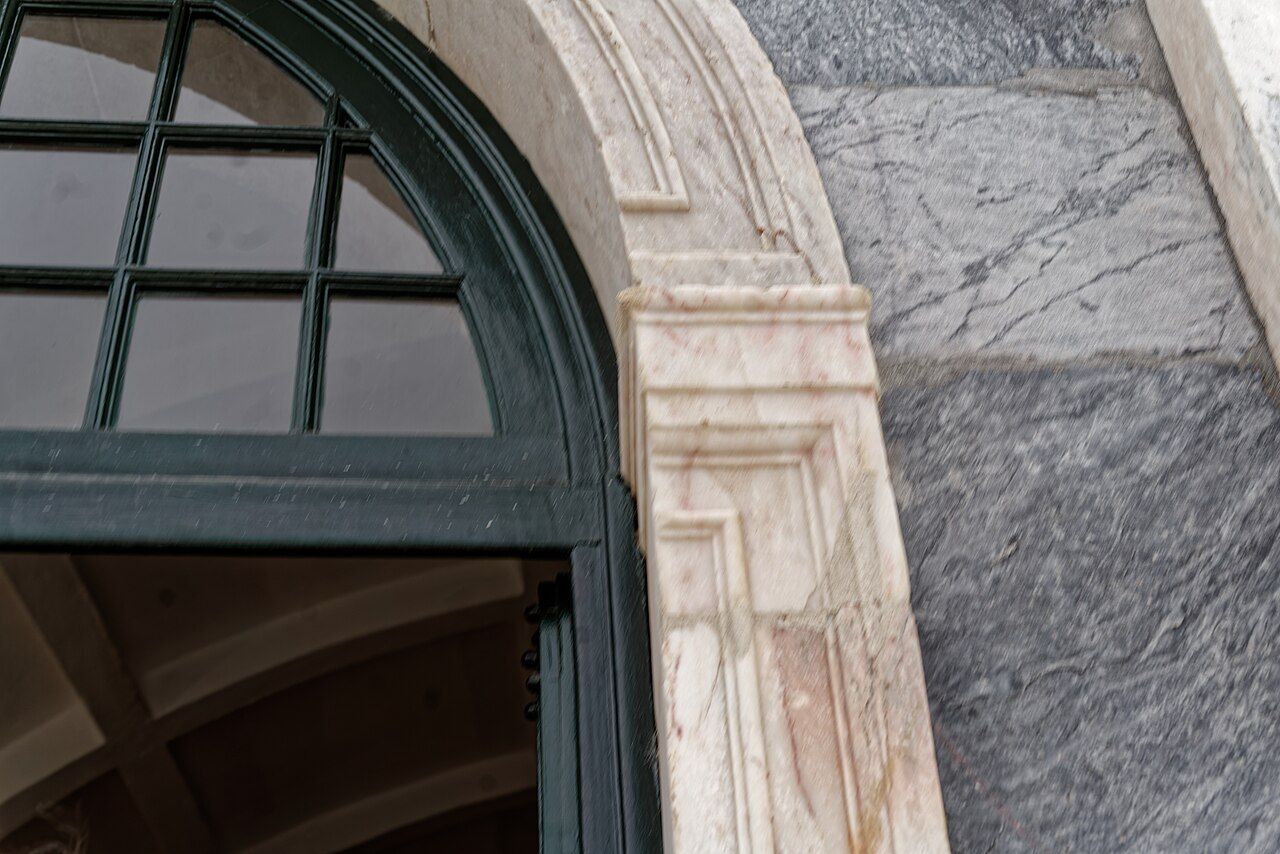
I count steps when I want to slow my eye down. At the Ducal Palace of Vila Viçosa, that habit gives way almost at once: the long marble facade has already made its point before I have got anywhere near the entrance. The Paço Ducal was the main residence of the Dukes of Braganza, but it does not ask to be understood only as a royal address. Its scale belongs to the square in front as much as to the rooms within, and the two are better considered together.
The square and the facade
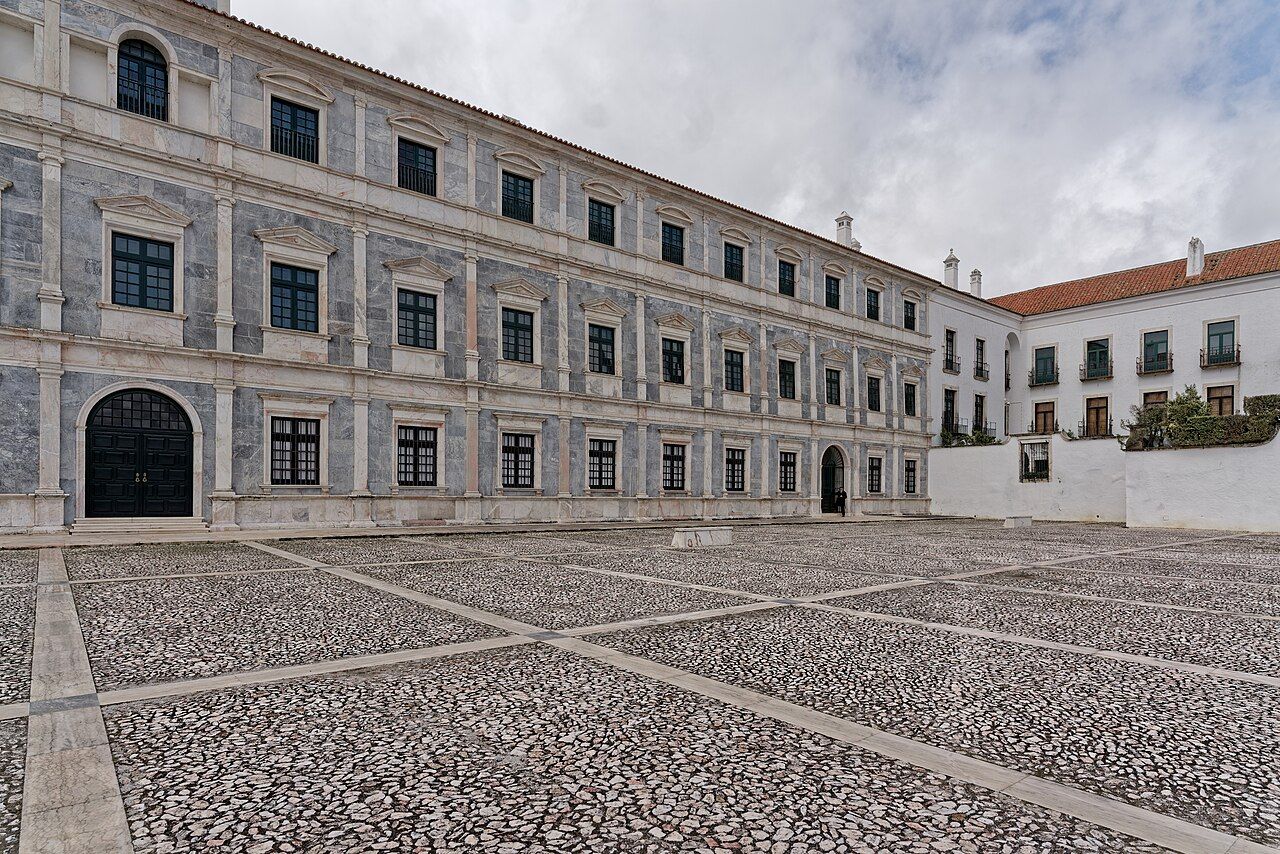
Building began in 1501 under Jaime, the fourth Duke of Braganza. The palace’s long main facade faces the vast Terreiro do Paço, clad in local white marble and arranged in three storeys of regular windows. There is a pleasing firmness to that repetition. It is not a facade that needs ornament piled on top of ornament to hold the eye; the marble, the measured windows and the sheer length do the work. I prefer this kind of confidence to grand buildings that seem to be pleading their case.
The square gives the palace room to be read from a distance, and makes the front of the building feel like part of public life rather than a private wall. In 1640 the eighth duke was acclaimed King João IV of Portugal, ending sixty years of Spanish rule. An equestrian statue of João IV stands in the middle of the Terreiro do Paço, directly tying the open space to that change in the family’s fortunes. The palace is not just a residence with a history attached; its main square gives that history a place to stand.
Facing the square, the Igreja dos Agostinhos holds the tombs of the Dukes of Braganza. I like the way these parts of the setting speak to one another without needing much explanation: the palace, the statue and the church each carry a different piece of the same story. The square is vast, and that scale suits the subject. A tighter setting would make the palace feel more like a grand house; here, its connection to the dukes and kings is out in the open.
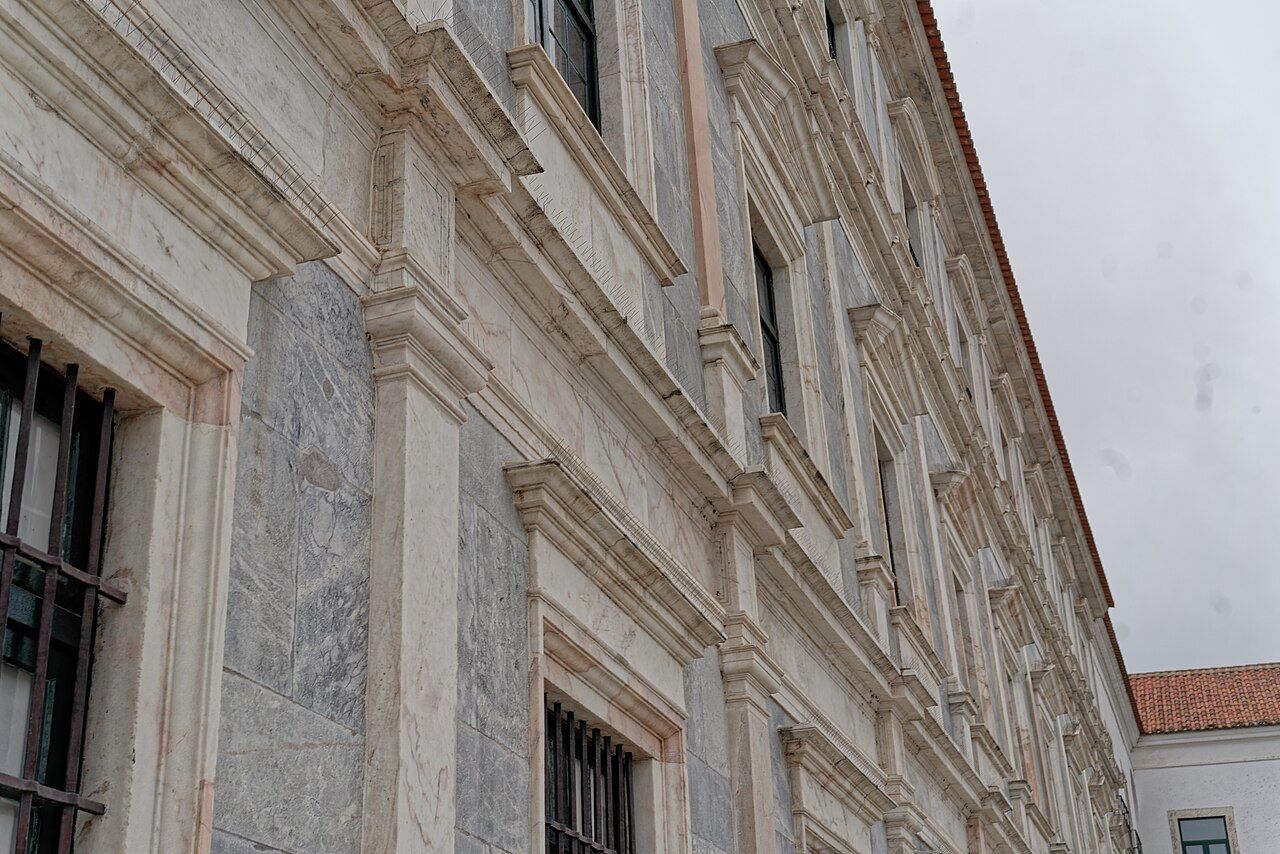
That history reaches beyond the palace itself. The Ducal Palace belongs to the story of the House of Braganza, while the surrounding town offers another scale of view in the rest of Vila Viçosa. I would not hurry through the square on the way to the rooms. It is the clearest introduction to why this residence matters, and the marble front is at its most convincing when seen with the space it faces.
Inside the palace
Visits pass through rooms with painted ceilings, tapestries and furnishings used by the last kings of Portugal. The range of things matters: the ceilings draw the eye upwards, while the furnishings keep the rooms close to the people who used them. I find that more compelling than a procession of grand objects with no sense of daily life. Here the palace’s royal past has texture, and the rooms make room for more than one kind of attention.
The private apartments of King Carlos I and Queen Amélie are kept much as they left them. There is a quiet directness to that detail. These are not simply rooms that carry the names of a king and queen; they retain the arrangement of private life, which makes the history feel less distant. King Carlos I set out from Vila Viçosa on the journey that ended with his assassination in Lisbon on 1 February 1908. That knowledge changes how I read the apartments. It is difficult to treat them as decoration once the journey beyond them is part of the story.
The palace is less a single grand room than a sequence of different kinds of memory. The royal apartments give one kind; the palace kitchen gives another. It is lined with hundreds of copper pans and pots, and the effect is a welcome shift from courtly rooms to the practical business of a household. I would give the kitchen its proper share of attention. It brings scale and repetition back down to something domestic, without making the palace feel any less grand.
The palace is less a single grand room than a sequence of different kinds of memory.
The palace is run by the Fundação da Casa de Bragança, set up in 1933 under the will of King Manuel II. He was the last king of Portugal, and went into exile when the Republic was declared in 1910. That thread gives the rooms a later ending than the first building might suggest: the residence began under a duke, became closely tied to kings, and remains in the care of the foundation established under the last king’s will. The history is long, but the visit does not have to be abstract. Marble, furniture and copper do a good deal of the explaining.
From Alandroal, Vila Viçosa is about 12 km north, a 15-minute drive by car. I would leave time for both the open square and the palace rooms, rather than treating one as a quick prelude to the other. The palace is at its best when its public face and its private details are allowed to sit side by side.
The marble facade is the palace’s grand gesture; the rooms are what make it stay with me.
Photos by Vitor Oliveira from Torres Vedras, PORTUGAL, CC BY-SA 2.0; Alvesgaspar, CC BY-SA 3.0