“A freshly stripped trunk is a bright reddish orange.”
How is cork harvested?
By hand, with axes. Cork is stripped from the trunk of the cork oak, and it takes skilled work: teams know how to cut the bark without harming the tree. I like the precision in that. This is not a rough job of pulling at the bark until it comes away; the cut matters, and so does leaving the tree able to grow a new layer.
Why does it happen in summer?
The harvest takes place in summer because that is when the bark comes away from the tree most easily. The timing is practical, not decorative. Once stripped, the trunk has that bright reddish orange colour; over the following months it darkens. There is something pleasingly direct about being able to read the work on the tree, then watch that colour change.
What does the number on the trunk mean?
A number is painted on each trunk to show the last digit of the year of its latest harvest. It is a small mark doing a useful job: it tells the harvest team when that tree was last stripped, without asking the bark to carry the whole story. The rule behind it is simple. A cork oak is first stripped when it is about twenty-five years old, and after that the same tree can be stripped only once every nine years.
Which harvests become wine stoppers?
Not the first ones. The first two harvests produce rougher cork, used for insulation, flooring and other products. From the third harvest, the cork is called amadia, and it is good enough for wine stoppers. I think that distinction is the part people are most likely to miss: cork is not all the same, and the tree’s first harvests have their own uses rather than being failed stopper material.
What happens to the bark?
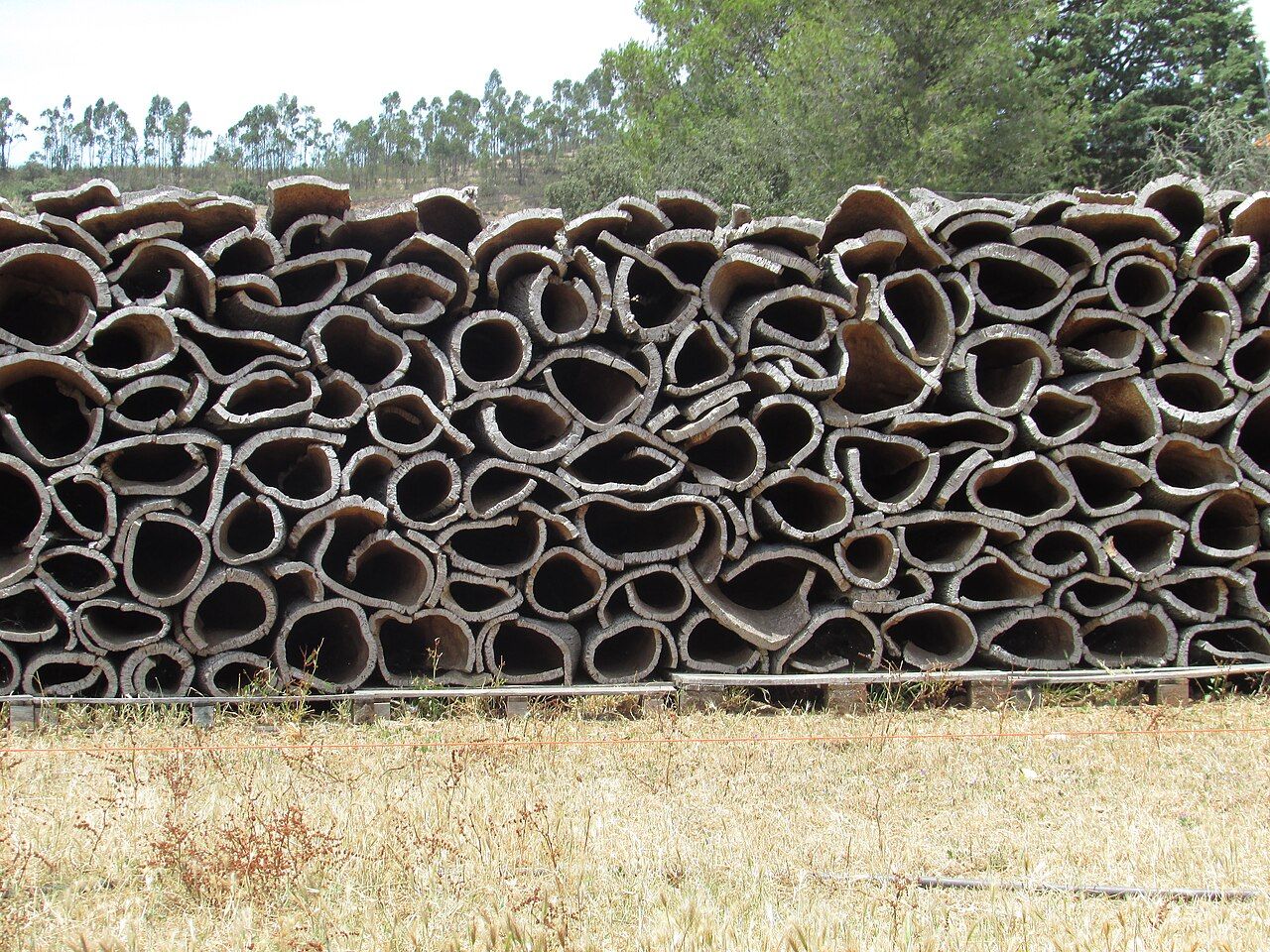
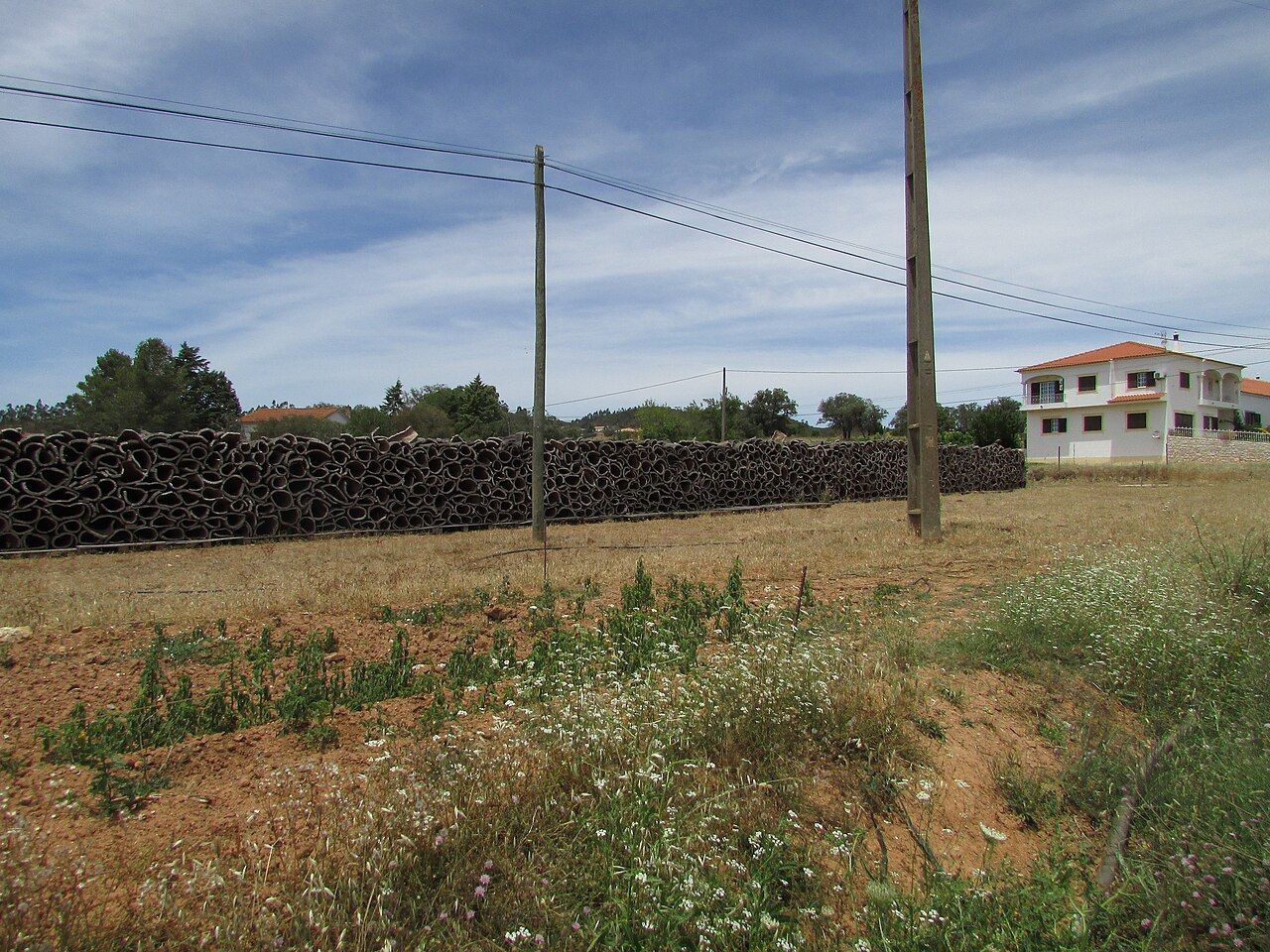
After stripping, the bark is stacked in the fields to dry before it goes to the factories. In the cork woods around the town, the harvest is a useful reminder that the trees are not simply scenery; there is skilled work here, with a measured rhythm built around each tree’s recovery. I can see the appeal of walking the farm tracks through this landscape, though the harvest itself is the detail I would keep in mind.
Does stripping kill the tree?
No. The stripped bark grows back as a new layer, which is why the tree can be harvested again after nine years. That long gap is part of the point: the work depends on protecting the tree, not taking everything it can give at once. I prefer that kind of harvest to the idea of a tree as a one-use resource. The trunk starts bright, darkens over the following months, and the cycle begins again. The tree grows a new layer; a wine bottle, at least, has to make do with a stopper.
Photos by Hugo Guerreiro, CC BY 3.0