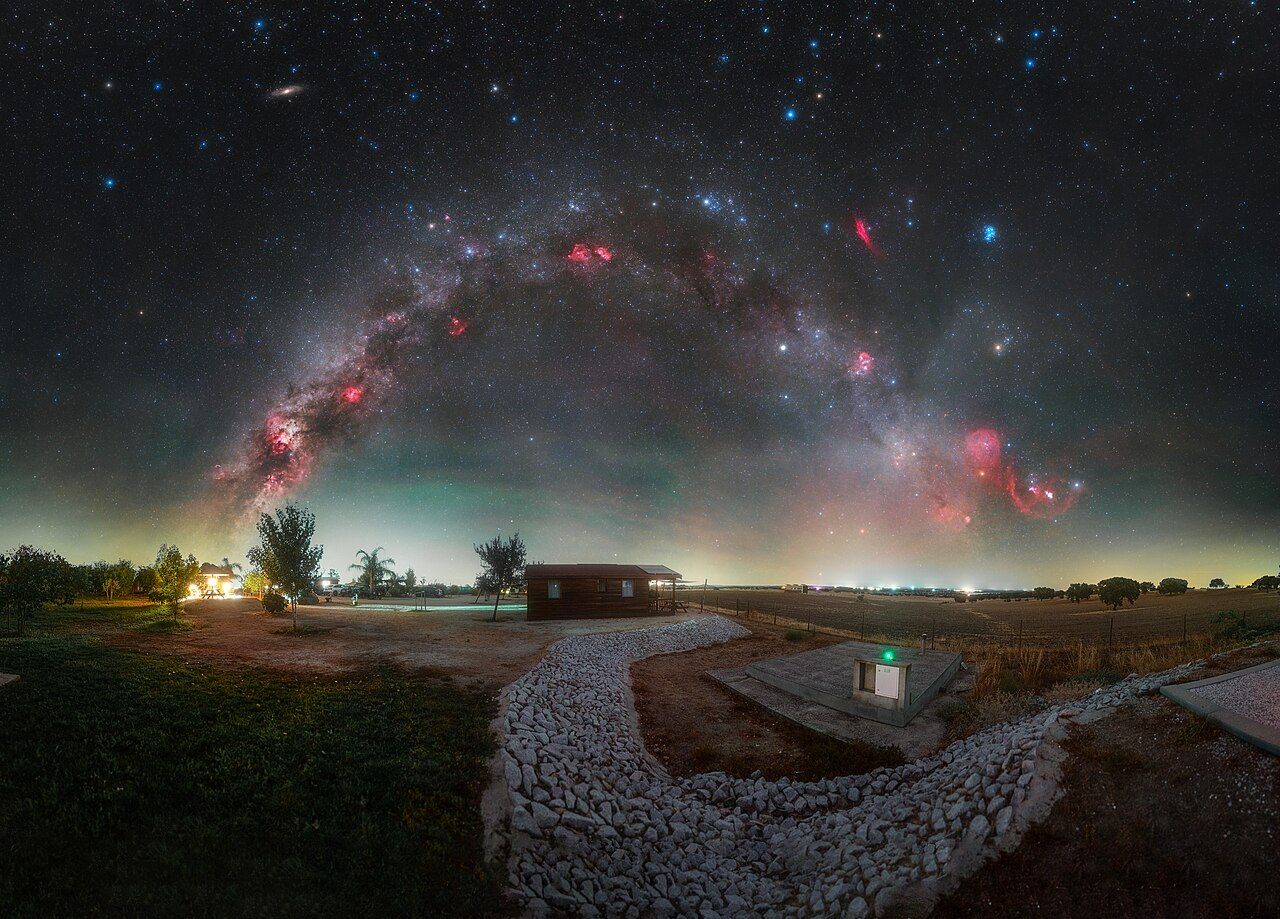
I have a habit of counting steps when I walk. Under a sky full of stars, it seems a rather poor use of attention: there is too much to look at, and no sensible way to keep a tally. The Alqueva area gives the habit a proper rival. With no moon in the sky, the Milky Way is visible to the naked eye, and away from village lights a field or lakeshore is enough to see thousands of stars. No elaborate plan is needed. The sky is doing the work.
Why is this place known for its skies?
In 2011, the Alqueva area became the first place in the world certified as a Starlight Tourism Destination by the Starlight Foundation. That is a distinction with a straightforward explanation: the area has few towns and little light pollution, so the night sky remains unusually available to the naked eye. The reserve is known as Dark Sky Alqueva. I like that the story here is not a complicated one. Less light from towns means more sky to see.
Which municipalities does the reserve cover?
It covers Alandroal, Barrancos, Moura, Mourão, Portel and Reguengos de Monsaraz. That is a broad patch of the Alentejo, rather than a single lookout point. I would not treat the whole area as interchangeable, but the basic pleasure is shared: get away from village lights and the stars become the main event. There is time for Alandroal's castle in another story; this one is about the sky above the municipality.
When is the sky darkest?
The darkest skies come in the nights around the new moon. That is the useful answer if seeing as much as possible is the priority. The Milky Way is visible without a telescope when the moon is absent; the less light competing with it, the better. I would choose that simple measure over making the evening into a project. There is no need to hunt for a grand viewpoint when a field or lakeshore away from village lights will do.
What can I see?
Thousands of stars are visible away from village lights, and the Milky Way is there to the naked eye on moonless nights. In August, the Perseid meteor shower is visible too. I like the scale of that: a sky that offers both the broad sweep of the Milky Way and the chance to watch for meteors, without needing to turn every minute into an activity. If a more guided look is appealing, an observatory near the lake runs night-sky sessions with telescopes.
How do I make a night of it?
Keep the plan uncomplicated: choose a night around the new moon, get away from village lights, and settle at a field or lakeshore. Or make the observatory session the focus and look through its telescopes with guidance. Summer has its own advantage here. Nights in the Alentejo stay warm, which makes long hours outside comfortable. I would take that unhurried stretch of sky over trying to pack the night with stops.
For me, the best part of Alqueva’s night sky is that it asks very little of you and gives your eyes plenty to do.
Photos by Vitor Oliveira from Torres Vedras, PORTUGAL, CC BY-SA 2.0