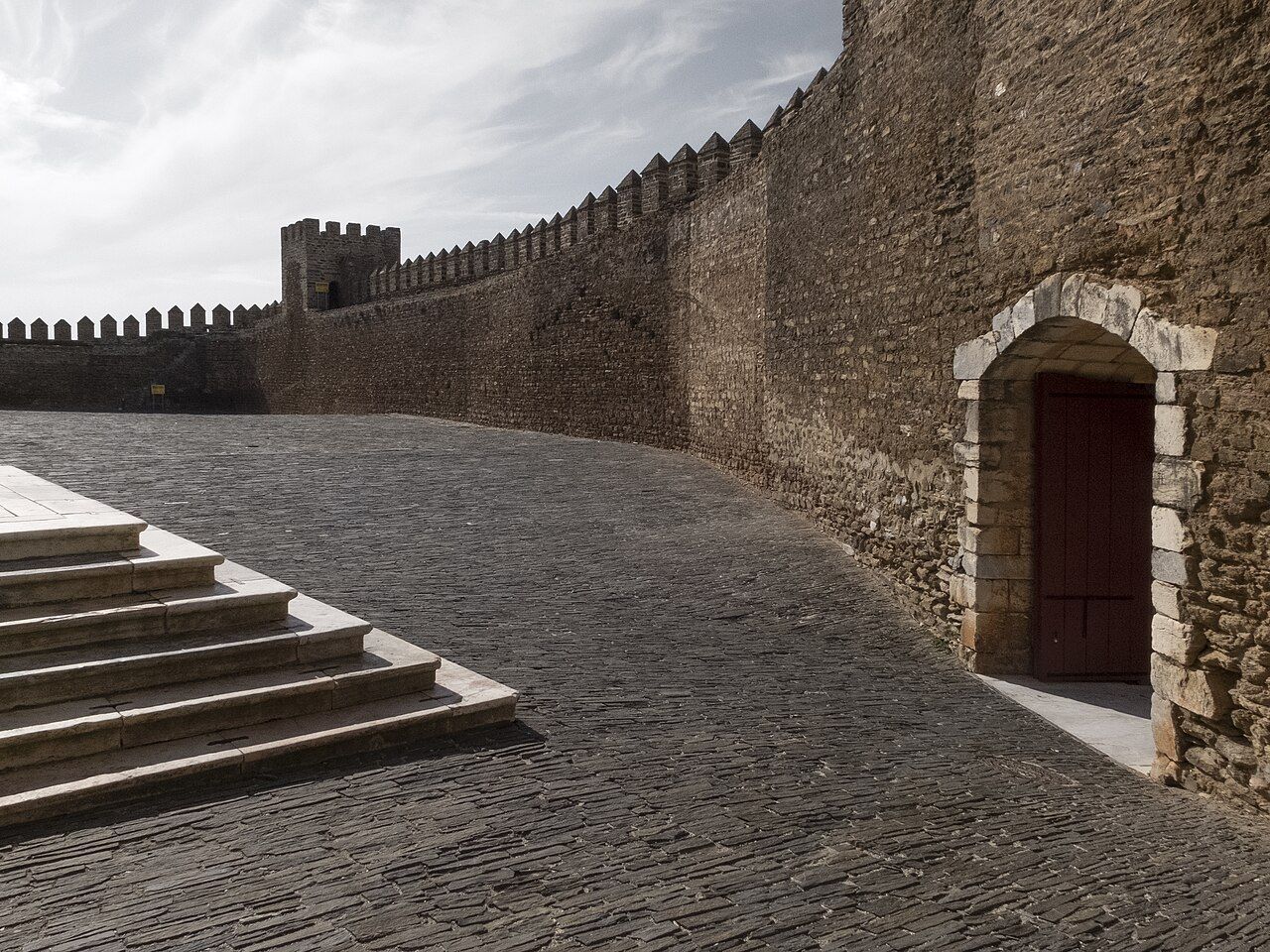
I have a habit of counting steps, and a walk around Alandroal’s castle gives that habit somewhere to go. The walls make a small loop, and the town’s compactness is plain from the first turn. The town is compact, and the old streets curve around the castle as if their route was settled by its presence. I like beginning there: not with a grand view or a long approach, but with the simple fact that the fortress is in the middle of town, on a low rise, and the streets have grown around it.
The castle and the town
Alandroal grew up around this castle, built late in the 13th century by the Military Order of Avis. Building work began in 1294, under Lourenço Afonso, Master of the Order. Those details give the place a sharper outline than the word “castle” usually does. This was not a lonely stronghold set apart from daily life; the town wrapped itself around the walls. The old streets curve along them, and the parish church, the Igreja Matriz de Nossa Senhora da Conceição, stands within them. That is a very particular arrangement of town, church and fortress, all gathered into the same centre.
The Order of Avis was a Portuguese military and religious order, and after the Reconquest it held much of this part of the Alentejo. I find it useful to keep that larger setting in mind, because Alandroal’s castle was part of a chain of fortresses built to guard the frontier between Portugal and Castile. Its position is not merely convenient; it belongs to a landscape shaped by a border. The past here is easy to over-dress in grand language. I prefer the plain explanation: a military order held territory, and a line of fortresses guarded its edge.
Alandroal makes most sense when I think of the castle as the town’s centre, not its ornament.
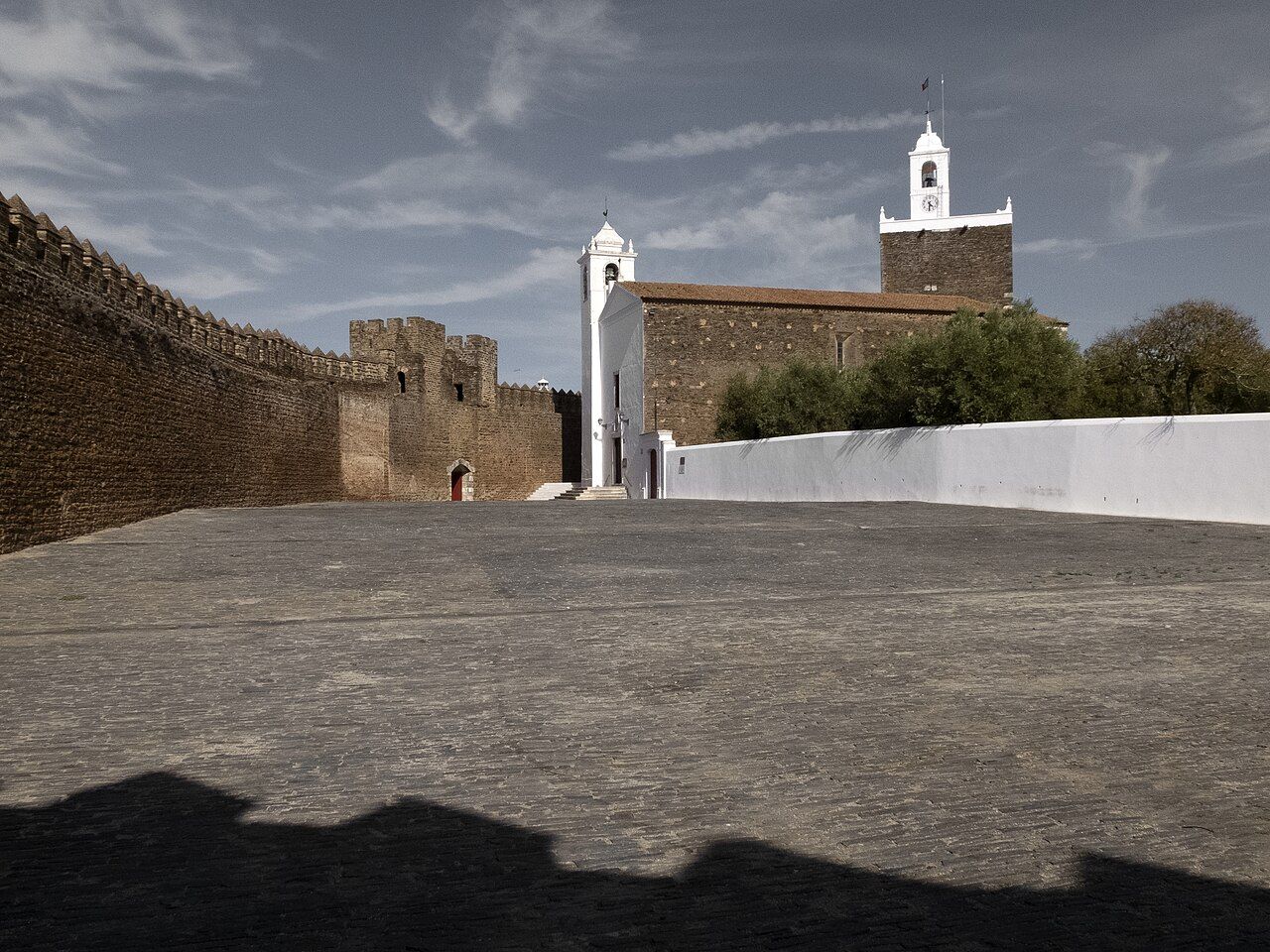
Alandroal makes most sense when I think of the castle as the town’s centre, not its ornament.
The walls are topped with battlements and strengthened by square towers along the circuit. They do not need much embellishment from me. I can follow their line and understand the basic logic of the building: a fortified enclosure set above the streets, with a church inside and the town pressed close around it. The circuit is short, which makes the castle feel less like a separate attraction than a shape the town keeps returning to. Even when the walk ends, the walls remain the point around which everything else is arranged.
Below them, the houses are whitewashed, many with bands of yellow or blue paint around doors and windows. Tall, broad chimneys rise from many of the old houses, a feature of building across the Alentejo. These are not details I want to turn into a checklist. Together, though, they make the view down from the castle feel closely tied to the region around it. The fortress tells me about defence and authority; the houses give that history a daily scale. I find the combination more interesting than either one on its own.
From the walls, the view runs east over farmland and holm oak country towards the Guadiana and Spain. That direction matters. The Guadiana forms the municipality’s eastern boundary, and here it is the border with Spain. From above, the frontier is not an abstract line on a map; it is the direction the land opens towards. The view also helps set Alandroal in the wider border country, rather than leaving it as a castle with a town attached. I keep returning to the border castles of the Reconquest as a way to place this one: not isolated, but part of a chain with a purpose.
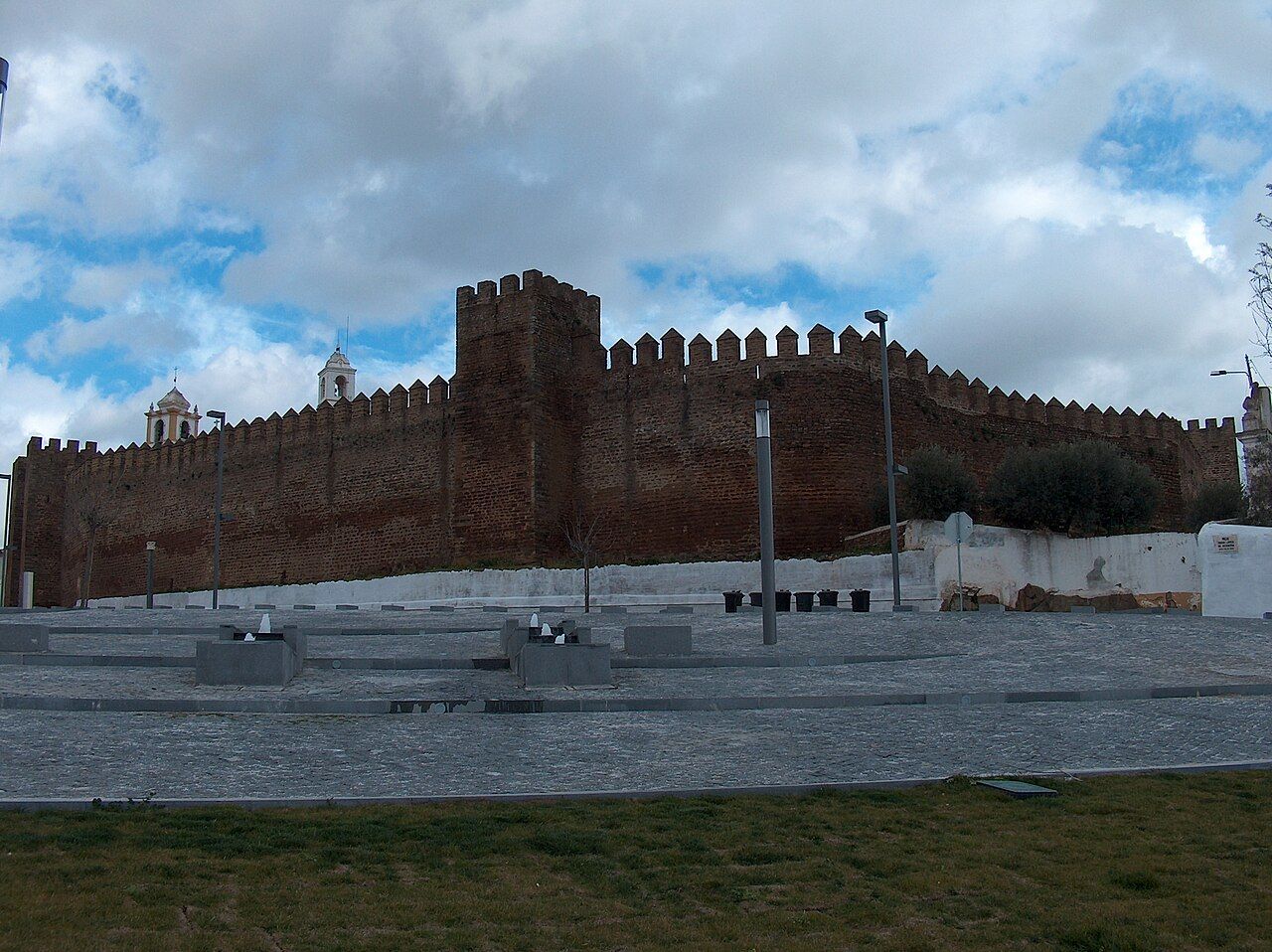
Alandroal is the seat of a small municipality in the Évora district, on the eastern edge of the Alentejo. That geography is the context I would carry away from the castle: a town gathered round its walls, farmland and holm oak country stretching towards a river that marks the border. The view gives the history room to breathe without making it grander than it is. I like that balance. The castle is the focal point, but it does not erase the town; the houses, church and streets make the fortress legible as part of a lived-in place.
For a visit, I would keep the plan simple. Walk the full circuit outside the walls, then let the streets curve around the castle and bring you back to its centre. The setting makes sense as part of using the town as a base, with Terena another name to keep in mind in the municipality. The essential practical detail is that the castle is in the town centre, on a low rise, and the old streets run around it. There is no need to make the walk more complicated than the place itself.
Alandroal’s castle is at its best when the town is allowed to be part of the story.
Photos by CACHE'Team, CC BY-SA 4.0; Mprim, CC BY-SA 4.0