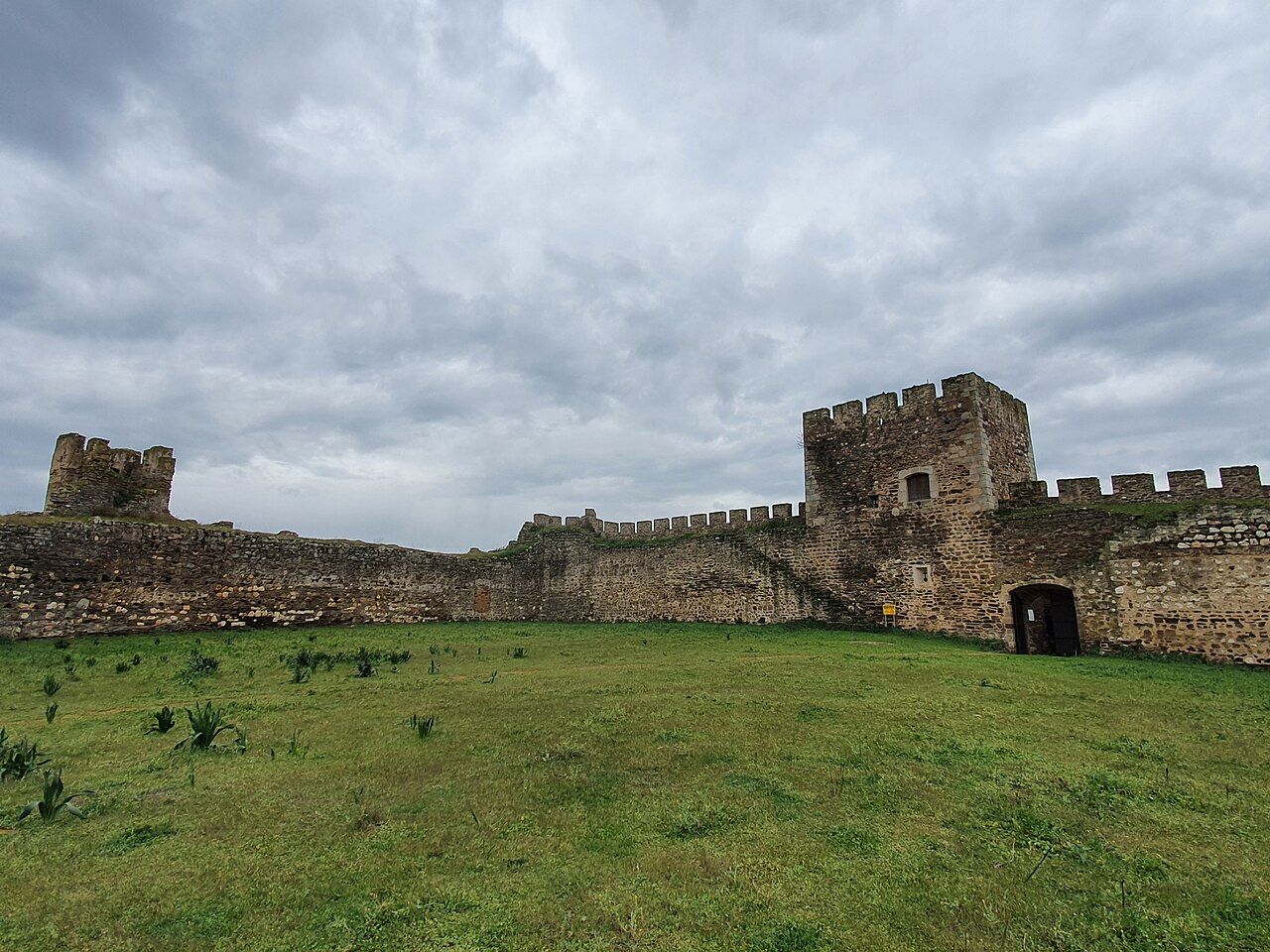
“The main street climbs from the lower village up to the castle gate.”
Where is Terena?
Terena sits on a hilltop in the municipality of Alandroal, south of the town and reached by a short drive. I find it the most compelling village in the municipality, and the reason is not complicated: its medieval castle stands at the top, with white houses running down the slope beneath it. The whole place has a clear shape. You can read it from below, then follow the village upwards towards the gate.
Terena was a municipality in its own right until it joined Alandroal in the 19th century. That history gives the village a place of its own in the area, though the hill and the castle do the more immediate work. I like places that make their geography plain. Here, there is no mistaking which way is up.
What is the climb like?
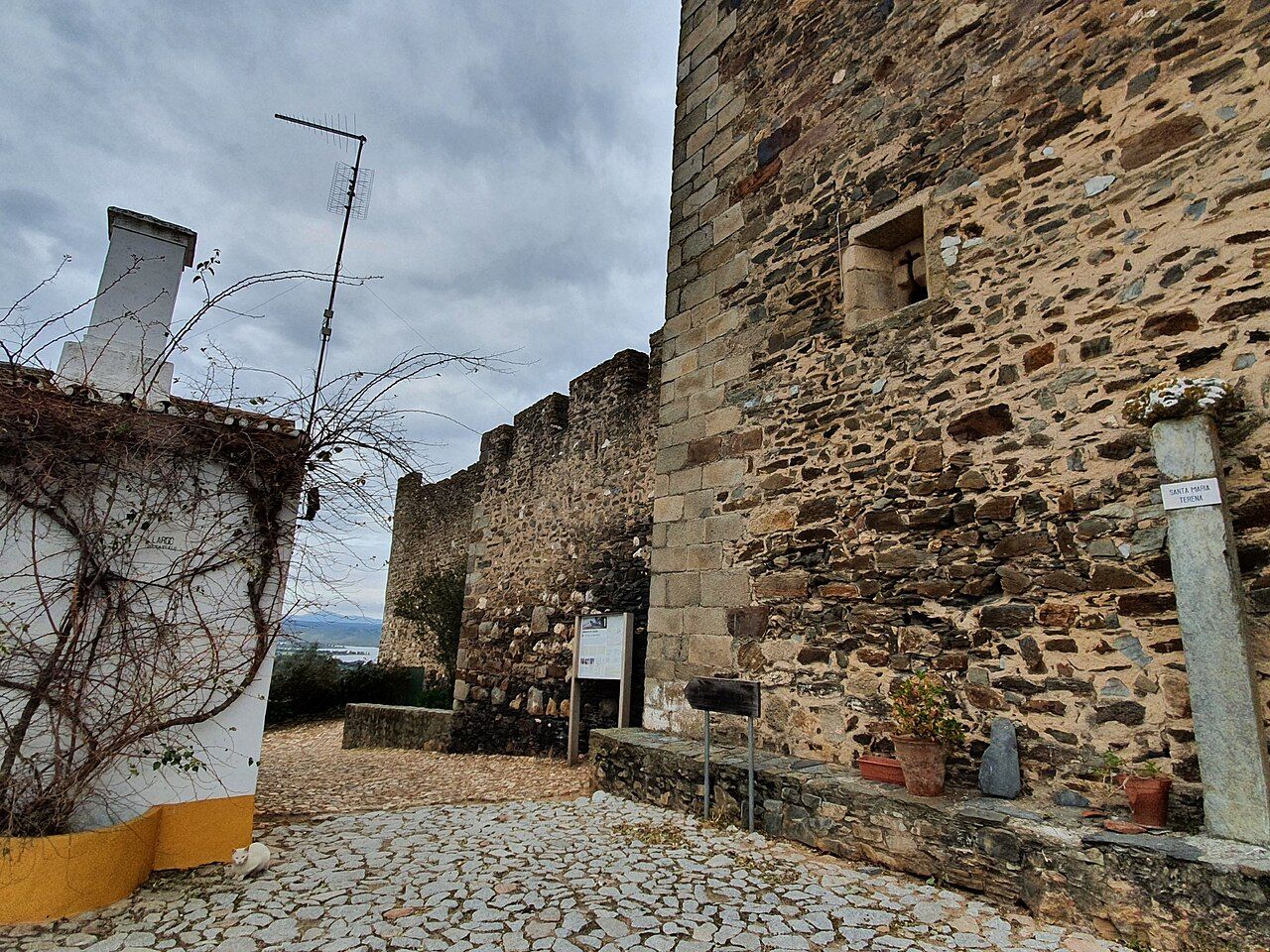
The main street rises from the lower village to the castle gate. It is the village’s defining route, not a detail to hurry past. The houses are low and whitewashed, with the tall chimneys typical of the Alentejo. Their line down the slope makes the castle feel like the natural end point of the climb, rather than a separate sight set apart from the village.
I have a habit of counting steps, though Terena’s character is easier to measure by its steady rise than by a number. The street gives the village its sense of direction; the castle gives that direction a destination. I would spend my attention on the relationship between the two, rather than trying to turn the climb into a checklist.
Why is there a castle here?
Terena’s medieval castle was built to guard the frontier with Castile. That purpose makes its position at the top of the village feel especially legible: the castle looks out from the high ground, while the houses descend below. I prefer this kind of landmark, whose place in the landscape explains itself, to one that needs a grand introduction. Here, the slope and the walls tell the story together.
The view of the village is part of that story too. From the castle end, the white houses are arranged down the hill; from lower down, the castle sits above them. Neither view is an accessory. Terena’s appeal depends on seeing the village as a whole, rather than treating the castle as the only point of interest.
Why is Terena linked with pilgrimage?
Terena appears in the Cantigas de Santa Maria, the 13th-century songs compiled at the court of Alfonso X of Castile. Several tell of miracles of Santa Maria de Terena, showing that the village was a place of pilgrimage. That is a different layer of its identity from the frontier castle, and I like the contrast: Terena’s history is not all defence and high ground.
The Sanctuary of Nossa Senhora da Boa Nova stands just outside the village. It is the fortified church of Boa Nova, a place to set alongside the stories of Santa Maria de Terena. The Roman-era the hilltop sanctuary of Endovelicus lay near Terena, at São Miguel da Mota. I think of these sacred places as part of the wider account of a village with more than one reason to draw people towards it.
What lies below the village?
The Lucefécit river runs through the valley below Terena, where it is dammed to form the Lucefécit reservoir. That valley gives the hilltop settlement its other essential feature: a lower landscape, broad beneath the compact rise of houses and castle. The contrast is what stays with me. Terena is not simply a castle above a street, but a village on a slope with the river valley beneath it.
Terena itself is best understood by joining the parts that are already close together: the climbing street, the castle at its top, the white houses below and the Lucefécit valley beyond.
Terena is the hill town I would choose to explain Alandroal.
Photos by Mprim, CC BY-SA 4.0; Vitor Oliveira from Torres Vedras, PORTUGAL, CC BY-SA 2.0