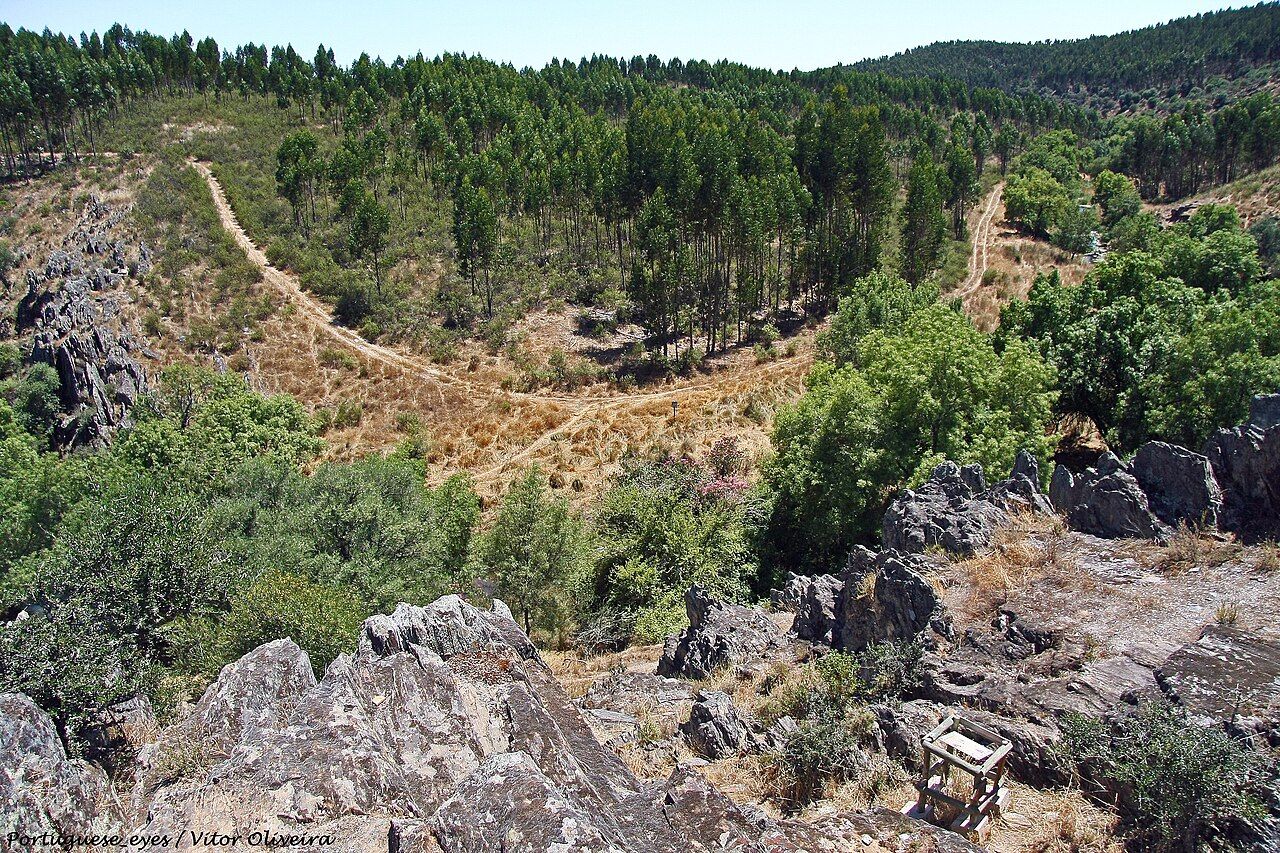
“Little of the sanctuary remains to see above ground.”
Who was worshipped here?
Endovelicus was a god worshipped in the west of the Iberian Peninsula before and during Roman rule. His main sanctuary stood on the hill of São Miguel da Mota, near Terena in the municipality of Alandroal. That makes this, for me, a story about a sacred place first and a set of surviving objects second. The hill takes its name from a later chapel dedicated to Saint Michael, a reminder that the name on the map belongs to a later layer of history. I like that small distinction: the hill’s name is not the god’s, and the two should not be muddled.
What was found on the hill?
Excavations found many inscribed altars and statues offered by worshippers. Many of the altars are carved in white marble, and their inscriptions are in Latin, recording vows made to the god. I find the altars easier to imagine than the sanctuary itself: a vow cut into marble is a particular kind of evidence, both formal and personal. The statues add to the record of offerings, though the facts here do not tell us what they looked like. What matters is the repeated act of bringing something to this hill. The finds make the sanctuary feel more than a name, even if the ground now gives little away.
What was the god associated with?
Scholars usually describe Endovelicus as a god associated with healing. I would keep that phrasing as it is: associated with healing, rather than turning it into a more elaborate claim. The Latin inscriptions record vows, and that is enough to give the place a human shape without pretending to know the details of each worshipper’s hopes. There is a difference between reading what the stones say and filling in everything they leave out. I prefer the first; it is a firmer footing, and this hill already has enough history without extra embroidery.
How do we know about the site?
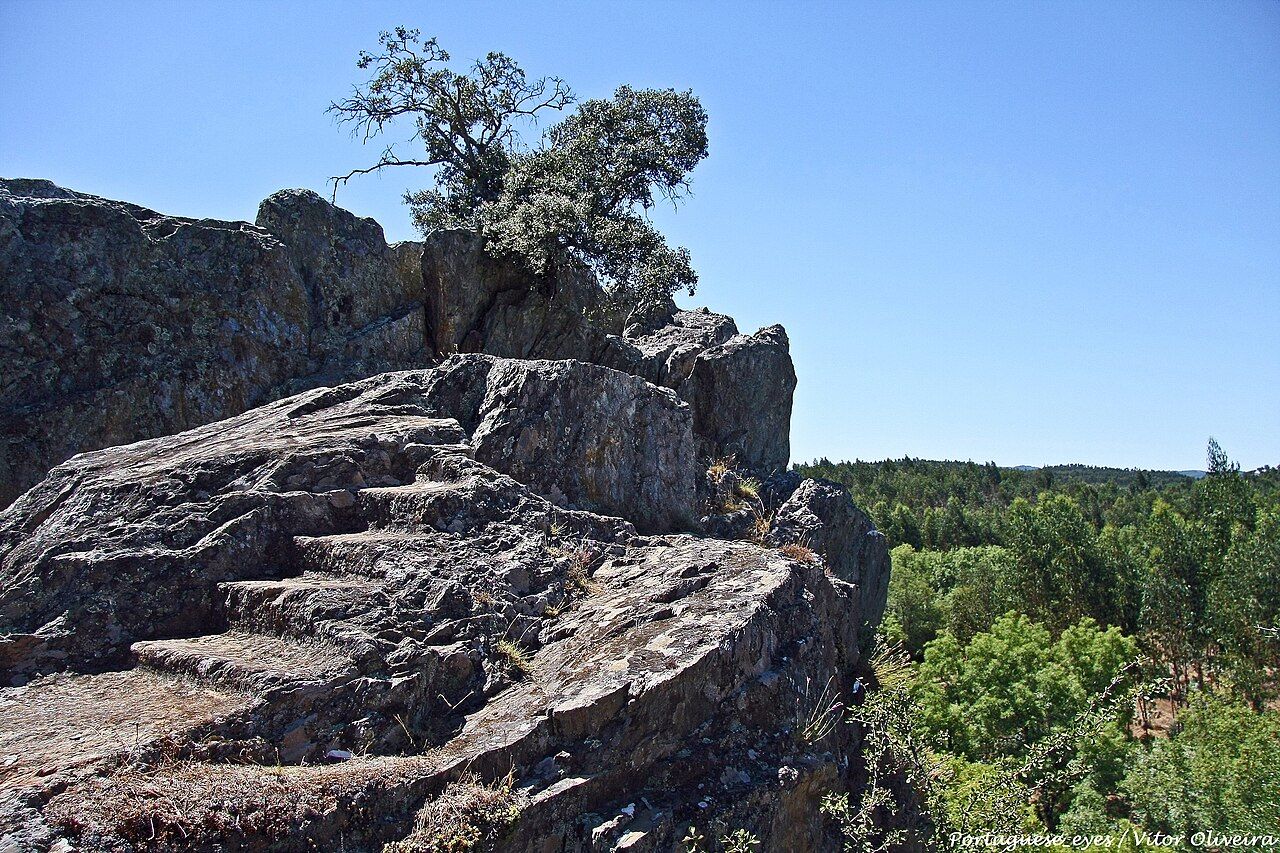
The archaeologist José Leite de Vasconcelos studied the site in the 1890s. Most of the finds are now in the National Museum of Archaeology in Lisbon. That movement of the objects changes how I think about the hill: the sanctuary is understood partly through things no longer there, while the place itself remains quiet farmland. I am glad the altars and statues can be studied, but I do not think a museum collection and a hill are interchangeable. One holds the finds; the other is where the sanctuary stood. For this story, both belong in view.
Is there much to see now?
Little of the sanctuary remains to see above ground, and the site lies in quiet farmland. I would not dress that up as a grand visible ruin. The appeal is the contrast between the sparse remains and what the excavations found: many altars, statues, and vows carved in marble. This is the oldest sacred place in the municipality, but its importance is not measured by how much still stands. I find that more interesting than a tidy set of remains, though it does ask for a little imagination. The hill is near Terena, and about ten kilometres from Alandroal; its terrain is plain. The region’s older layers sit alongside the region's medieval past.
A hill with little left to show can still make a stronger impression than a monument that explains everything.
Photos by Stephan Hoppe, CC BY 4.0; Vitor Oliveira from Torres Vedras, PORTUGAL, CC BY-SA 2.0