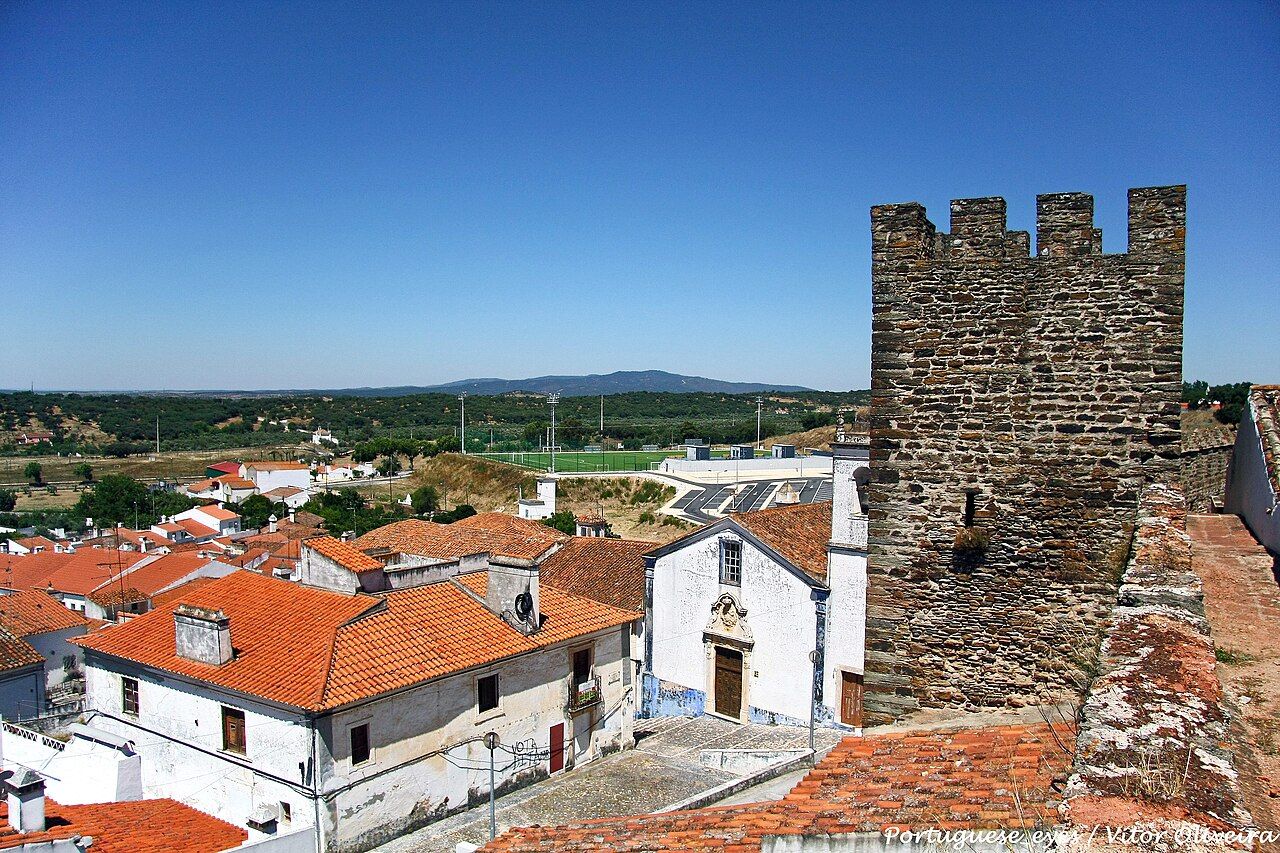
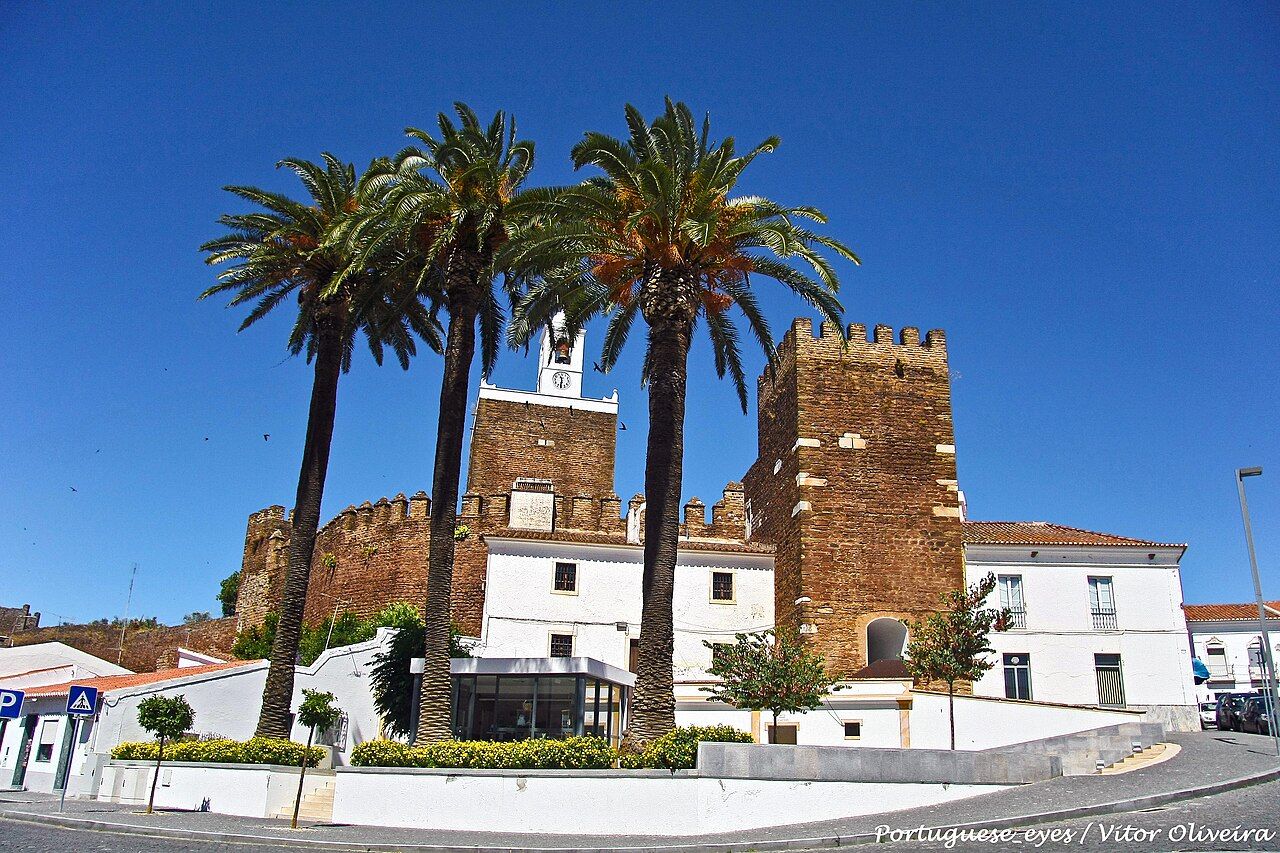
I have a habit of counting steps, and a border makes me wonder what, exactly, is being counted: distance, territory, or the years it took to decide where one kingdom ended and another began. I start with Alandroal, a hill town with a castle begun in 1294 by the Order of Avis. That is a useful place to begin, not because this story belongs to one castle alone, but because Alandroal makes the larger pattern easy to see. Its castle was part of a line of defence, and the line was made over time.
In the 12th century, the Christian kingdom of Portugal pushed south into the Moorish lands of the Alentejo. Évora was taken from the Moors in 1165 by Gerald the Fearless, known in Portuguese as Geraldo Sem Pavor. There is a pleasing directness to the name, though conquest itself is not a tidy business. What matters here is that the advance left a frontier to defend. Much of the conquered land was given to military orders, among them the Order of Avis, the Templars and the Hospitallers.
The Order of Avis grew from a brotherhood of knights based at Évora. Its place in this story is not merely a matter of guarding territory: in 1385 João I, Master of the Order of Avis, became king and founded the Avis dynasty. The order that had grown from a brotherhood based at Évora was now tied directly to the crown. I like this part of the history because it makes the castles feel less like isolated pieces of architecture and more like evidence of who held power, and how that power was organised.
A line of castles
King Dinis, who reigned from 1279 to 1325, built or rebuilt many castles along the border with Castile. Alandroal’s castle was begun in 1294, during his reign, by the Order of Avis. The castles at Alandroal, Terena, Juromenha, Monsaraz, Mourão, Estremoz and Elvas formed a line of defence along the border. Read the names aloud and the point becomes plain: this was not a single stronghold standing apart, but a chain of places set to guard a frontier.
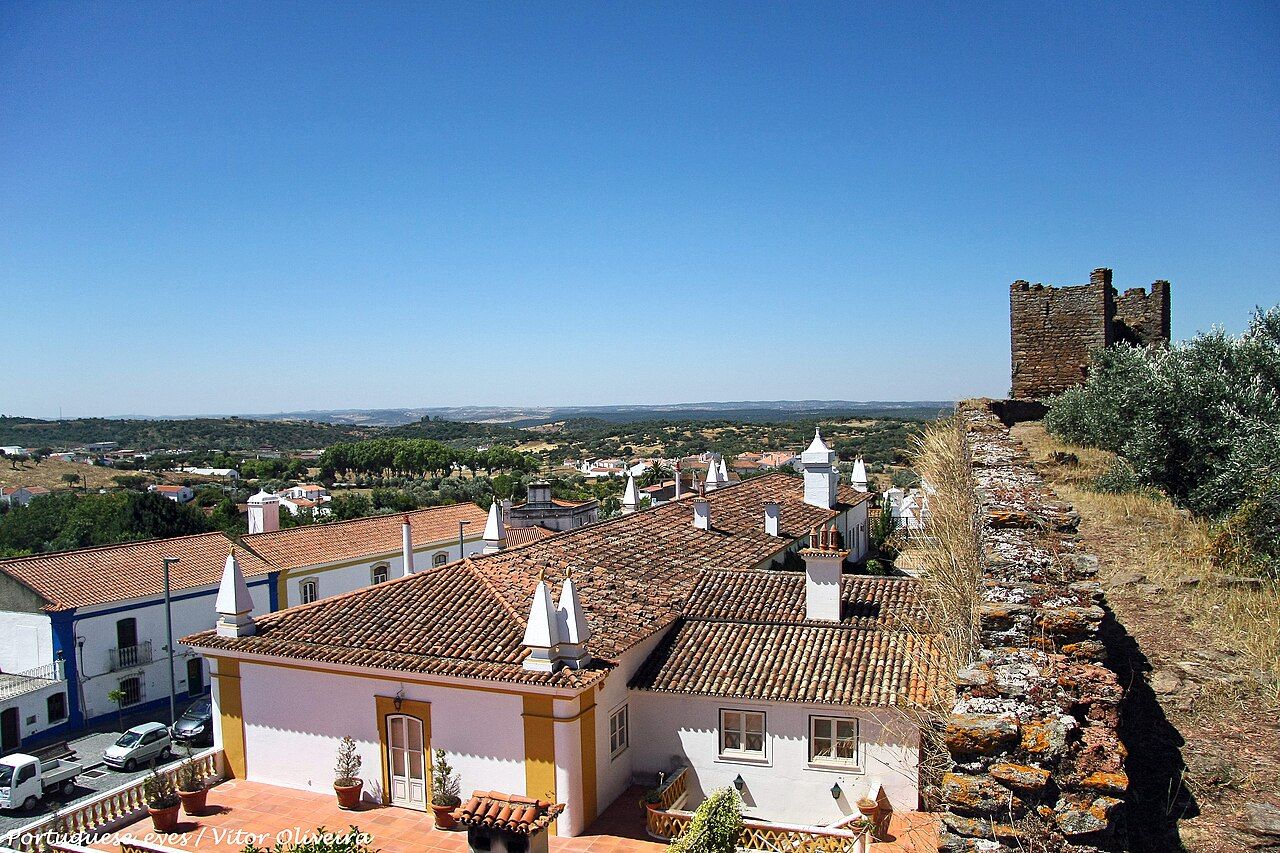
A typical castle of the period had a keep, called the torre de menagem, inside a ring of walls with towers and gates. That arrangement is more persuasive to me than a grand idea of the castle as a symbol. A keep at the centre, walls around it, towers and gates: the design says that holding a place depended on layers of defence. It is also a reminder that a castle is not a border, but a line of castles makes the border hard to ignore.
The line can still be followed through the names of places, even when the castles do not all present the same story. There is the ruined fortress of Juromenha, and there is walled Monsaraz. I would rather think of them together than treat each as a solitary monument: their importance here is in their place among Alandroal, Terena, Mourão, Estremoz and Elvas, part of a defensive arrangement along the border. The landscape gives the history its geography; the list gives it its logic.
It is also a reminder that a castle is not a border, but a line of castles makes the border hard to ignore.
The treaty
Castles could guard a frontier, but they could not settle every question about where it ran. The Treaty of Alcañices in 1297, between King Dinis and Ferdinand IV of Castile, fixed much of the border. Under the treaty, Olivenza, Campo Maior and Ouguela passed to Portugal. The treaty is the hinge in this story: before it, the frontier had been shaped by the Christian advance south and defended by castles; with it, much of the border was fixed by agreement between rulers.
That helps explain why the Portuguese–Spanish border is one of the oldest stable frontiers in Europe. The castles belong to a period when defence mattered, but their story is not simply one of war or stone. It is also about the political work of making a frontier hold. King Dinis built or rebuilt castles; the treaty fixed much of the border; the line of strongholds gave that boundary a defensive presence. Each fact has its own weight, and none needs dressing up as a legend.
In Portuguese, the border strip between Portugal and Spain is called the raia. I find that a more useful word than “frontier” here: it names not just a line on a map but the border country in which these castles sit. Many were later strengthened with bastions in the 17th century, another layer added to places whose purpose had already changed with the boundary they guarded. The castles at Alandroal, Terena, Juromenha, Monsaraz, Mourão, Estremoz and Elvas remain easiest to understand as a group. Alandroal is where I start; the raia is the larger story.
I still count steps, though history has the better method: build a castle, make a treaty, then add bastions when the old walls need a rethink. I’ll stick to counting.
Photos by Dirk Stoop, PD the file; Sqjaques, CC BY-SA 4.0
