I have a habit of counting steps. With this history, I find myself counting years instead: from 1640 to 1668, a war fought chiefly across the Alentejo border, until Spain recognised Portugal’s independence. Twenty-eight years is a long measure for any conflict. It is longer still when the names on the map are not abstractions but Elvas, Juromenha, Estremoz and Olivenza, all given new bastioned fortifications during the war.
The story begins before the fighting. From 1580 to 1640, Portugal and Spain shared the same king. Then, on 1 December 1640, a revolt in Lisbon acclaimed the Duke of Braganza as King João IV. That was the beginning of the break; it was not the end of the struggle. The war with Spain that followed became known as the Restoration War, and the Alentejo border became its main front. For me, that is the essential distinction: acclaiming a king could declare the change, but the border country had to bear the argument that came after.
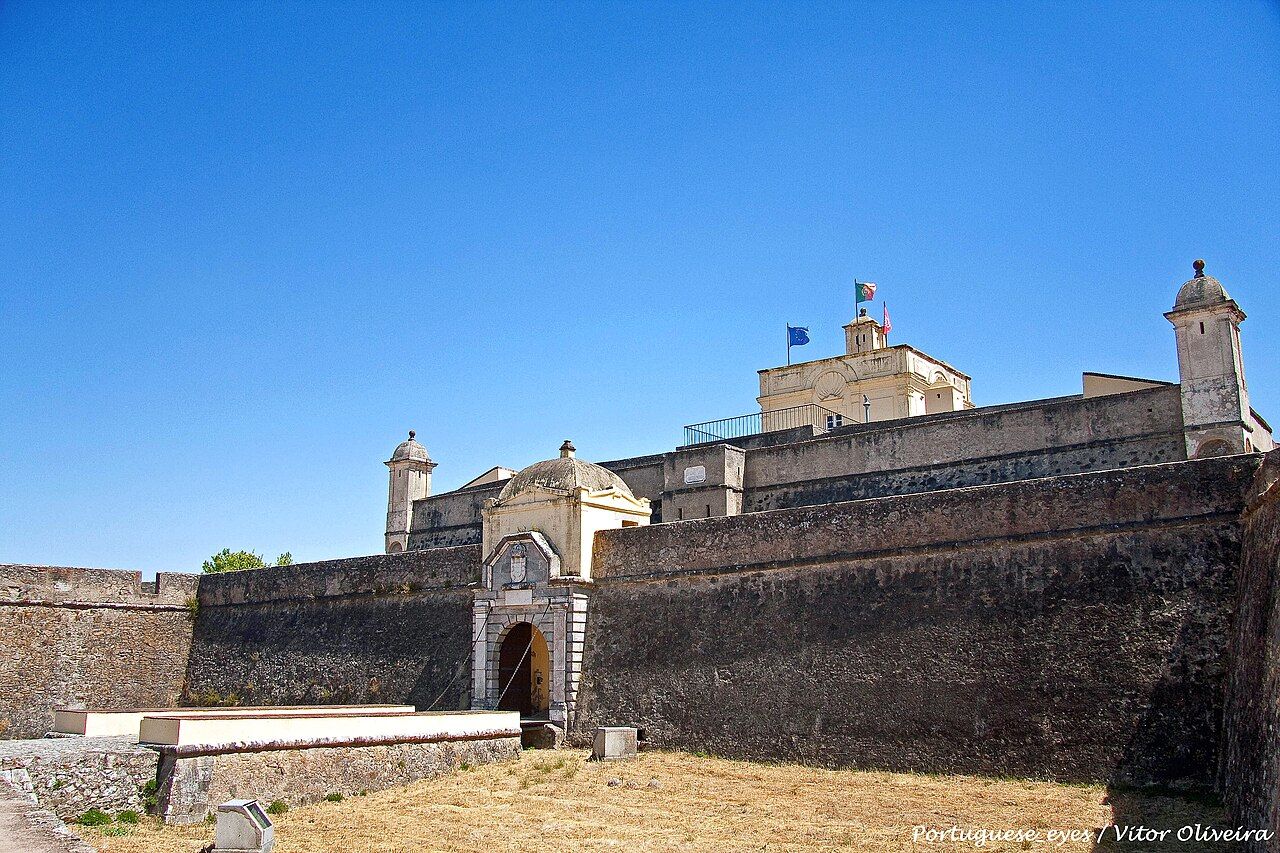
The terrain was plain. There is no need to dress it up as a dramatic mountain barrier or a natural wall. The forts matter precisely because this country did not provide that kind of simple defence. Elvas, Juromenha, Estremoz and Olivenza were all given bastioned fortifications during the war. I like the plainness of that fact. It leaves the work of defence where it belongs: in the forts, and in the long contest over who would hold the country around them.
Juromenha was held for a time by Spanish forces. That single detail resists any tidy picture of a border permanently held on one side or the other. The war was fought across the surrounding country, and possession could shift. I would rather keep that uncertainty in view than make a neat sequence out of a conflict whose full account is not contained in a list of victories. Fortifications were part of the story, not a guarantee that the story had already been decided.

The plain was not a pause between battles; it was the ground on which the question of independence was decided.
The plain was not a pause between battles; it was the ground on which the question of independence was decided.
Elvas and the battles
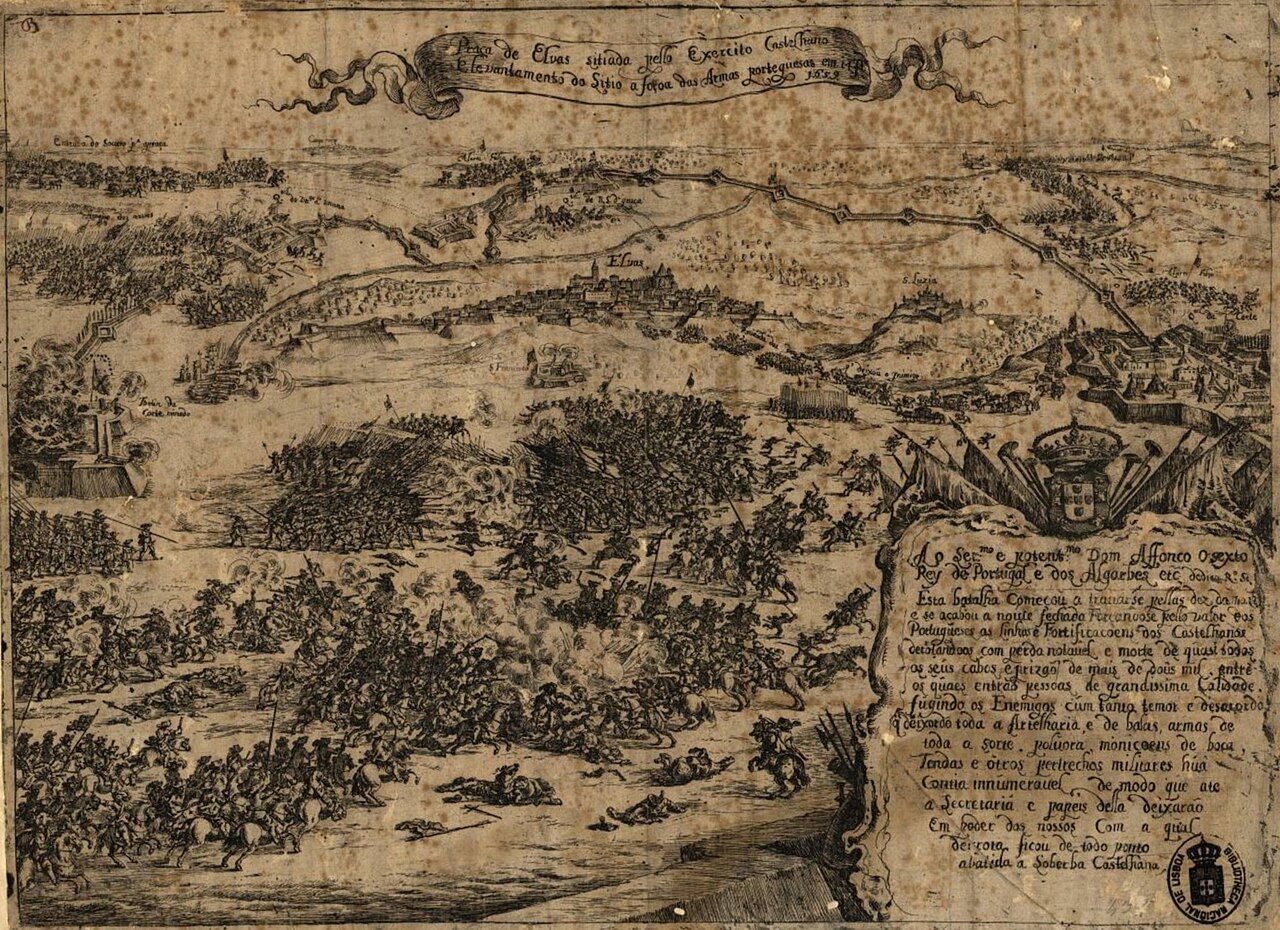
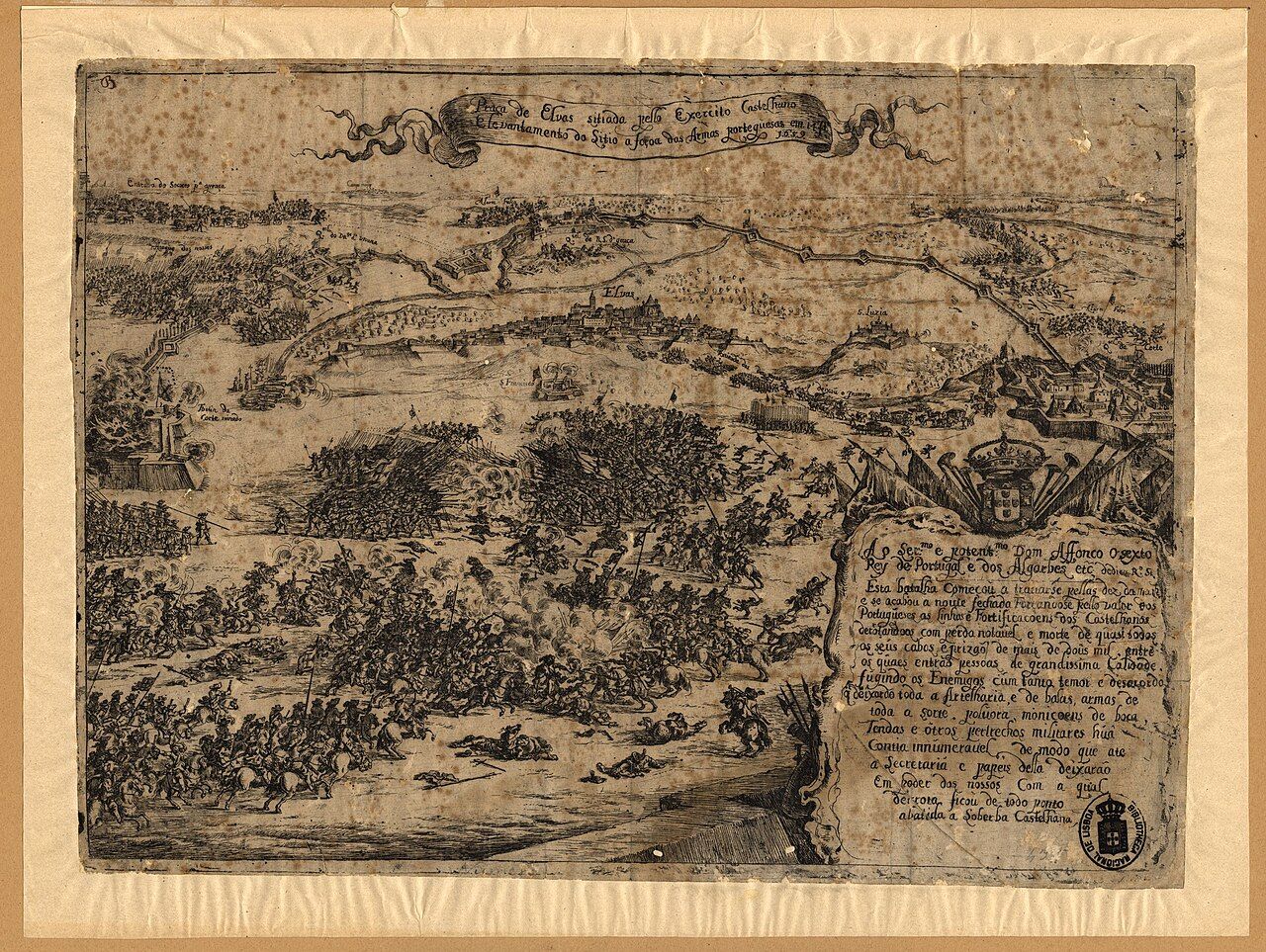
In 1659, the Battle of the Lines of Elvas broke a Spanish siege of Elvas. I keep returning to the directness of that outcome: a siege was broken, and the town’s place in the war was made plain. The fortifications there belong to the same larger account, not as scenery but as part of a border made contested. For a closer look at the defensive works, I have more on the bastions of Elvas in the story of the bastions of Elvas.
In 1663, the Portuguese won the Battle of Ameixial near Estremoz. Two years later, on 17 June 1665, they won the Battle of Montes Claros, between Borba and Vila Viçosa. Montes Claros was the last major battle of the war. The Portuguese army there was led by the Marquis of Marialva, with the German-born general Frederick Schomberg. I prefer the precision of those details to a grand claim that one battle alone explains everything: place, date, commanders, and the result. The result was a Portuguese victory, but the peace still lay ahead.
The Duke of Braganza, acclaimed as King João IV in 1640, stands at the start of this account; the later battles belong to the work of preserving what that revolt had asserted. The link between the beginning and the ending is not a straight march from declaration to recognition. It is a war across the border, with the Alentejo as its main front, new bastions at four places, a Spanish siege broken at Elvas, and Portuguese victories at Ameixial and Montes Claros. I would not compress that into a single heroic moment. The length of the conflict is part of the point.
The peace
Under the Treaty of Lisbon in 1668, Spain recognised Portugal’s independence. The war was over. That ending matters because it gives the years from 1640 to 1668 their shape: a revolt in Lisbon, a border made into the main front, and a treaty that recognised the independence first claimed. It is a better ending than pretending the story was settled by the first acclamation, or that the last major battle and the peace were the same thing.
On 1 December, Restoration of Independence Day, is a public holiday in Portugal. The date returns to the beginning, to the revolt in Lisbon and the acclaiming of King João IV. I like that the name remembers restoration rather than merely victory. It puts the emphasis on what was being recovered, and on the years it took for that claim to be recognised.
The war’s geography is compact enough to follow in names, but not simple enough to reduce to a route: Elvas, Juromenha, Estremoz, Olivenza, then the places associated with the battles. I count the years more easily than I could count the steps across that plain. Twenty-eight years is already quite enough counting.
Of the story, the forts tell the truest part: independence had to be held, not just declared.
Photos by Sqjaques, CC BY-SA 4.0; Vitor Oliveira from Torres Vedras, PORTUGAL, CC BY-SA 2.0