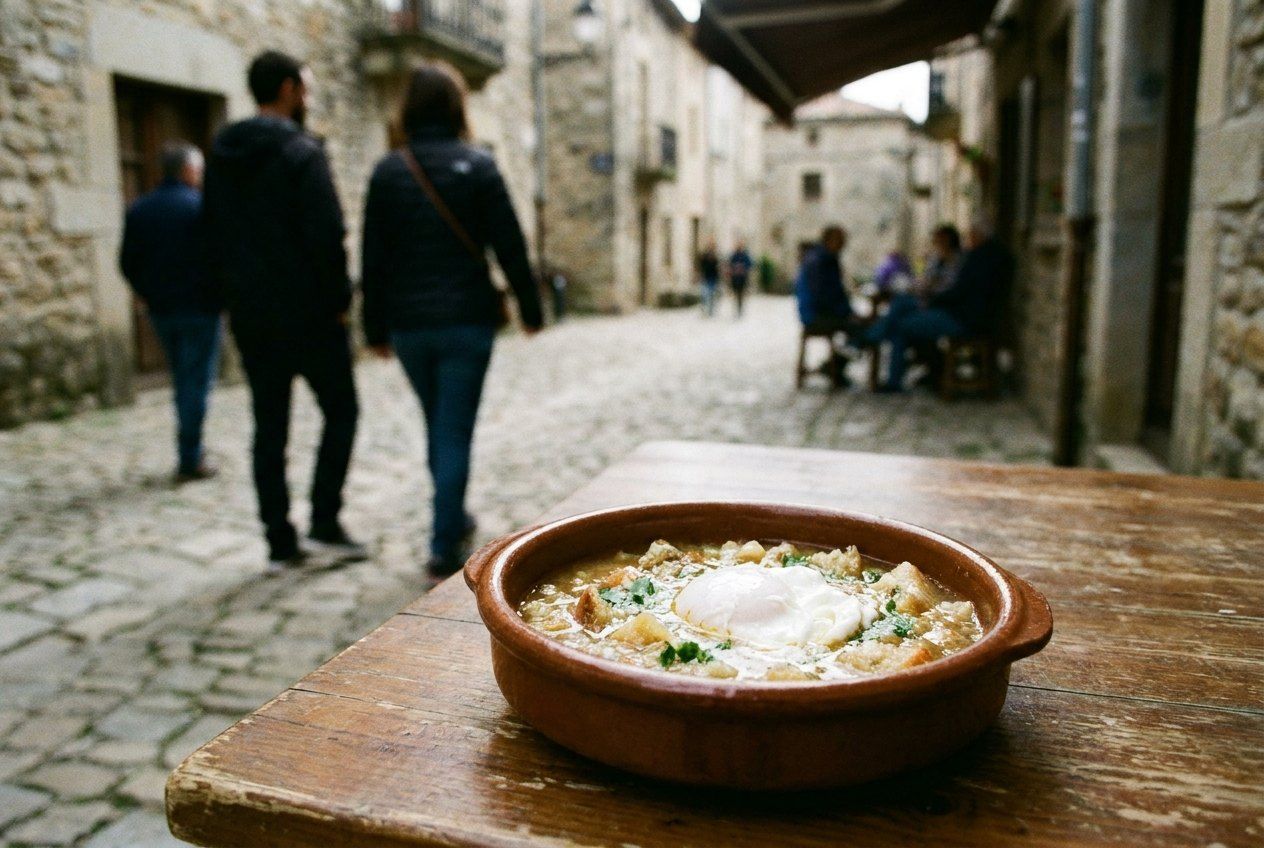
“Bread and all.”
That is the whole idea of açorda alentejana, and I like the directness of it. This is bread soup built from a few things: garlic, fresh coriander, salt, olive oil, boiling water, bread and usually an egg. It is served all over the region. Nothing in that list is trying to steal the show from the bread.
What goes into it?
Fresh coriander is the defining herb of Alentejo cooking, so it gives this açorda its character. The garlic, herbs and salt are pounded together in a mortar; the olive oil goes in with boiling water. Some cooks add pennyroyal, called poejo, instead of coriander or alongside it. I would start with coriander: it is the clearest expression of the dish’s Alentejo roots.
How is it made?
Slices of bread go into a deep bowl. The boiling water is poured over the pounded mixture and olive oil, then over the bread. That is the method, without a long list of extra steps to distract from it. The bread is the meal’s substance, not a garnish, and I think of Alentejo bread as the point around which the rest of the bowl is arranged.
What sits on top?
A poached egg is usually added. Açorda is sometimes served with salt cod instead of the egg, or with salt cod as well as the egg. I like that the dish can make room for either version without losing its plain, bread-led nature; the bowl still begins with the same pounded garlic and herbs, olive oil and boiling water.
How do you eat it?
With a spoon, bread and all. It was a cheap, filling meal for farm workers, and that history makes sense of its simplicity: the bread is already in the soup, and nothing is wasted on a separate performance. I find that more appealing than a dish dressed up to look complicated. Açorda asks for attention to the basics, and gives them the whole bowl.
I like açorda best when the bread gets the last word.