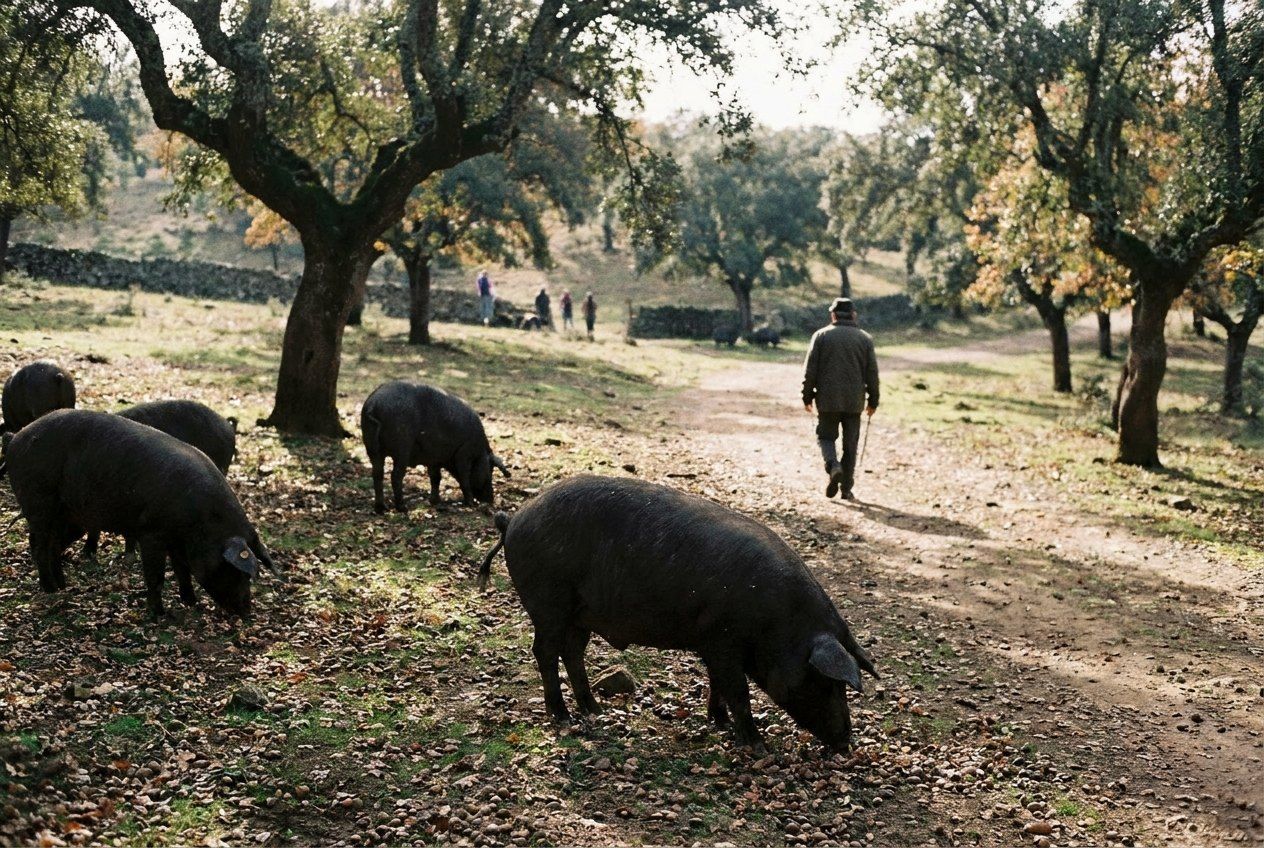
I can tell what sort of menu I am reading by the nouns that make me pause. Porco preto is one of those names: direct enough to sound like a dish, but really the name for the black Alentejo pig, a native breed known as the raça alentejana. I like a menu better when it leaves room for that distinction. The pig, the cuts, the cured meats and the cooked dish are related, but they are not interchangeable; knowing which is which makes the choices far more interesting.
The pigs are raised outdoors in the montado landscape, in cork woods, where they root and graze beneath the trees for much of the year alongside sheep and cattle. The oak trees matter especially in the season called the montanheira. From autumn into winter, the pigs feed on fallen acorns from holm oaks and cork oaks. That is not just an evocative detail to put beside a menu description. The acorn diet gives the meat marbled fat and a sweet, nutty flavour, a clear reason the landscape belongs in the story of the food.
I find that a more satisfying explanation than treating porco preto as a label that promises a certain kind of meal. It begins with an animal and the way it is raised; it continues with what it eats, then with the cut or cured product in front of you. The breed is closely related to the Iberian pig raised across the border in Extremadura, another useful clue to the family resemblance without making the names mean exactly the same thing. Porco preto names the black Alentejo pig. The raza alentejana is its breed name. On a menu, those words point back to the same animal, not to a particular preparation.
From grill to curing room
For grilled meat, the names to recognise are plumas, secretos and presas. They are popular cuts, and they are often served simply: grilled over charcoal, with salt and a side of migas. I prefer that plain approach to a dish that crowds the pork with explanations and extras. Here the meat has already been given its flavour by the acorns; a short list of ingredients lets that sweetness and nuttiness stay in the foreground. If migas is unfamiliar, it is the accompaniment named with the grilled pork, and a plate of migas is one of the clearest ways to picture the pairing.
The names change when the meat is cured. Presunto is ham; paio and chouriço are sausages. Presunto de Barrancos is more specific: it is a cured ham with protected designation of origin from the south-east Alentejo. The useful thing is not to flatten all of these into “black pork” as if they were the same item. A cut such as pluma, secreto or presa is popular grilled; presunto, paio and chouriço belong to the cured side of the table. The names tell you what you are being offered, even before the rest of the menu gets involved.
There is a family history behind that curing tradition, too. The matança, the family pig slaughter, was a winter tradition when sausages were made for the year. I like the practical sense of it: the slaughter and the making of sausages belong together, with the food prepared for the months ahead. It is a different way of thinking about pork from ordering one grilled portion at a time. The word matters because it carries that household tradition, not because every serving of porco preto should be mistaken for a product made in the same way.
The names are useful because they tell me whether I am choosing a cut, a cured meat or a cooked dish.
Carne de porco à alentejana is the cooked dish whose name can cause the most confusion. It is pork marinated in wine, garlic and red pepper paste, then cooked with clams and served with small cubes of fried potato. That is a particular combination, not another name for the pig or for a grilled cut. I like the contrast between its ingredients and the spare charcoal version, but I would not order one expecting the other. The menu has moved from naming the animal to naming a whole preparation.
There is also açorda alentejana, another name worth keeping in mind when reading about Alentejo food.
For me, the pleasure of porco preto is partly in following those distinctions back to the montado: outdoor-raised pigs, acorns fallen beneath holm oaks and cork oaks, then meat with its marbled fat and sweet, nutty flavour. From there the menu branches into grilled plumas, secretos and presas, cured presunto, paio and chouriço, or carne de porco à alentejana with its clams and fried potato cubes. The names are useful because they tell me whether I am choosing a cut, a cured meat or a cooked dish. I can count the steps from tree to table without needing to count the steps themselves—which is just as well, as I tend to lose track when the menu arrives.