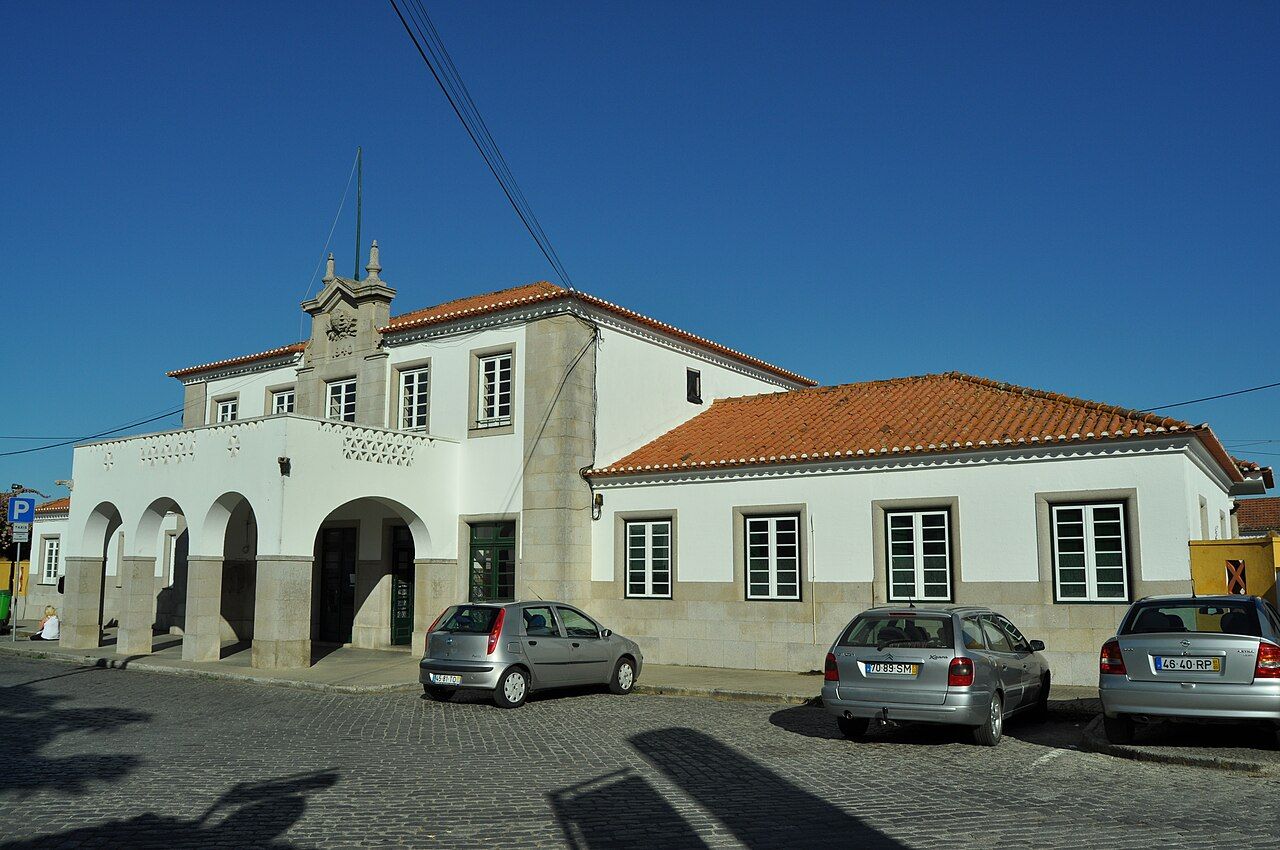
“Alandroal has no railway station.”
Can I get to Alandroal by train?
No. Alandroal has no railway station, and neither do most nearby towns. Comboios de Portugal runs Intercidades trains from Lisbon to Évora, with the journey taking about an hour and a half. Évora is the most practical hub for arriving without a car; from there, the nearest station is about an hour away from Alandroal by car. That gap between the train and the place you actually want to be is the important bit.
I like the train for reaching Évora, but it does not make the rest of the journey disappear. If the plan is to stay in Alandroal or explore the smaller towns, the train is only the first leg.
Do coaches help?
Long-distance coaches link Lisbon with Évora, Estremoz and Elvas. They offer more options for reaching the larger towns, but they are not a replacement for local transport between every stop and every village. I would think of them as a way to get into the area, rather than a way to roam around it once there.
Évora makes the most sense as a hub if arriving without a car. From there, the onward journey still needs a plan: the distances are not the only issue; local buses between smaller towns are few and run mainly around school times.
Can I rely on local buses?
Not for easy, flexible journeys between the smaller towns. The buses do run, but mainly around school times, which makes them a limited option for a day built around castles, villages or the lakeshore. I would not make a whole itinerary depend on stitching together local bus journeys. The network is there; it simply does not do the job a car does.
Taxis are available in the main towns and can be booked for trips to the villages. That gives a car-free visitor another way to cover the last stretch, though it is worth treating taxis as part of the plan rather than assuming buses will fill every gap.
What about cycling?
A bicycle is one of the ways to get to villages, castles and the lakeshore, alongside a car or taxi. I like the idea of cycling between the villages, but it is a different proposition from expecting a bus to appear whenever the day changes shape. The choice is really about how much independence the trip needs: public transport gets you to a few useful points, while a bicycle can take you further into the countryside.
Did the train used to go further?
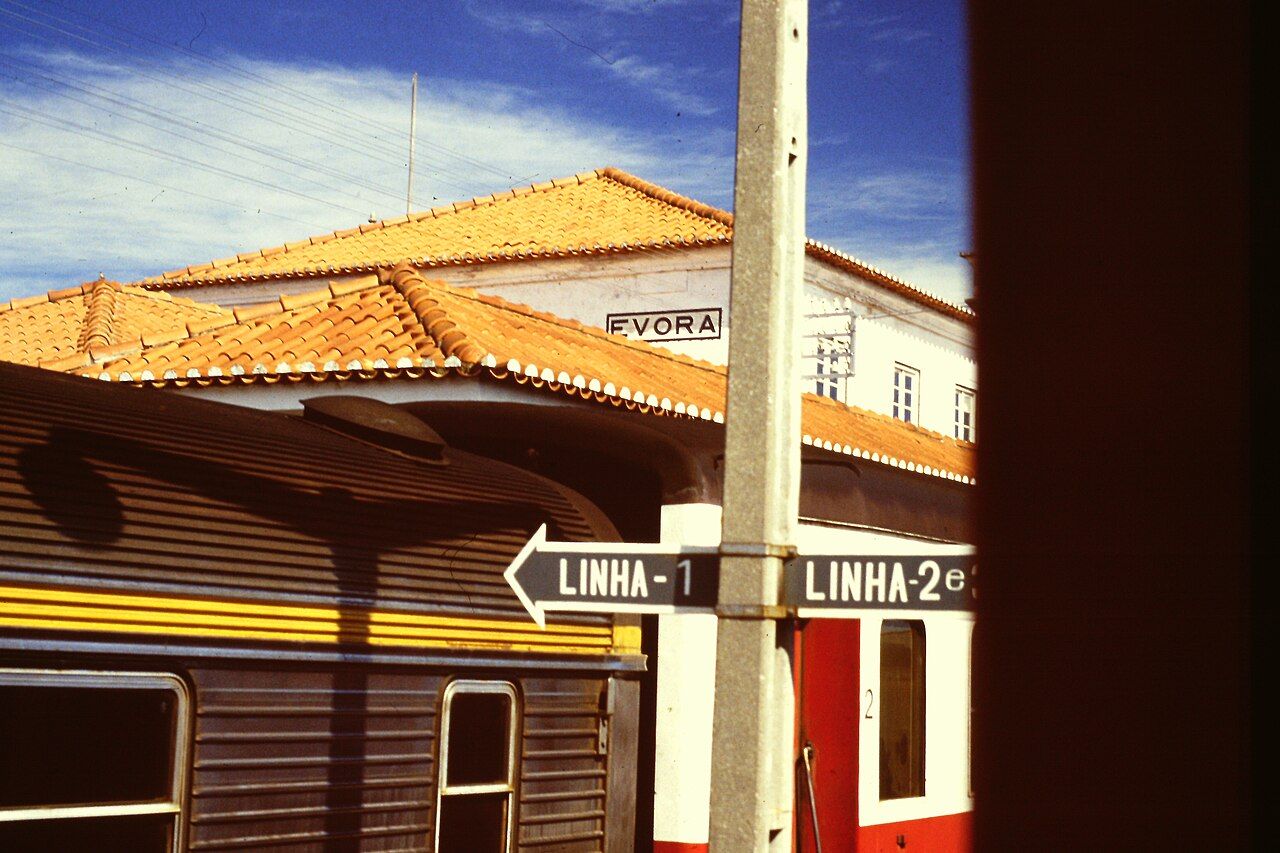
A branch railway once ran to Vila Viçosa, but it has long been closed. It is tempting to imagine that rail connection still doing the work, but it is history, not a current way to travel. For present-day arrivals, the useful rail link is Lisbon to Évora; the onward connections are by road.
So, can I visit without a car?
Yes, with limits. It is possible to reach Évora, Estremoz or Elvas by long-distance coach, and to reach Évora by train from Lisbon. Taxis and bicycles can help with the onward journeys. But for getting between the smaller towns, and out to villages, castles and the lakeshore, a car is the simplest option. I count steps as I go; here, I would count connections too. The buses count school times, which is at least one kind of timetable joke.
Photos by RSAlmeida, CC BY-SA 4.0; Carlos Vieira Romão, CC BY-SA 4.0