“We bones that are here await yours.” It is a blunt way into Évora, and a reminder that this city does not smooth its history into a single story. The words are above the entrance to the Capela dos Ossos, in the Church of São Francisco, whose walls are lined with human bones and skulls. I find it hard to treat that as just another stop on a route. It asks for a pause. Then the city carries on, as it does, with a Roman temple, a cathedral roof and a main square all close enough to join into one unhurried day.
Évora is the capital of the Alentejo, roughly an hour west of Alandroal by car. In 1986, Évora’s historic centre earned a place among the sites recognised by UNESCO, and old walls ring a place that is easy to cover on foot. That last point matters more to me than a packed itinerary: Évora is best understood on foot, with its history arriving in layers rather than as a checklist. I have a habit of counting steps, but here the useful measure is how readily one part of the centre gives way to another.
The Roman centre
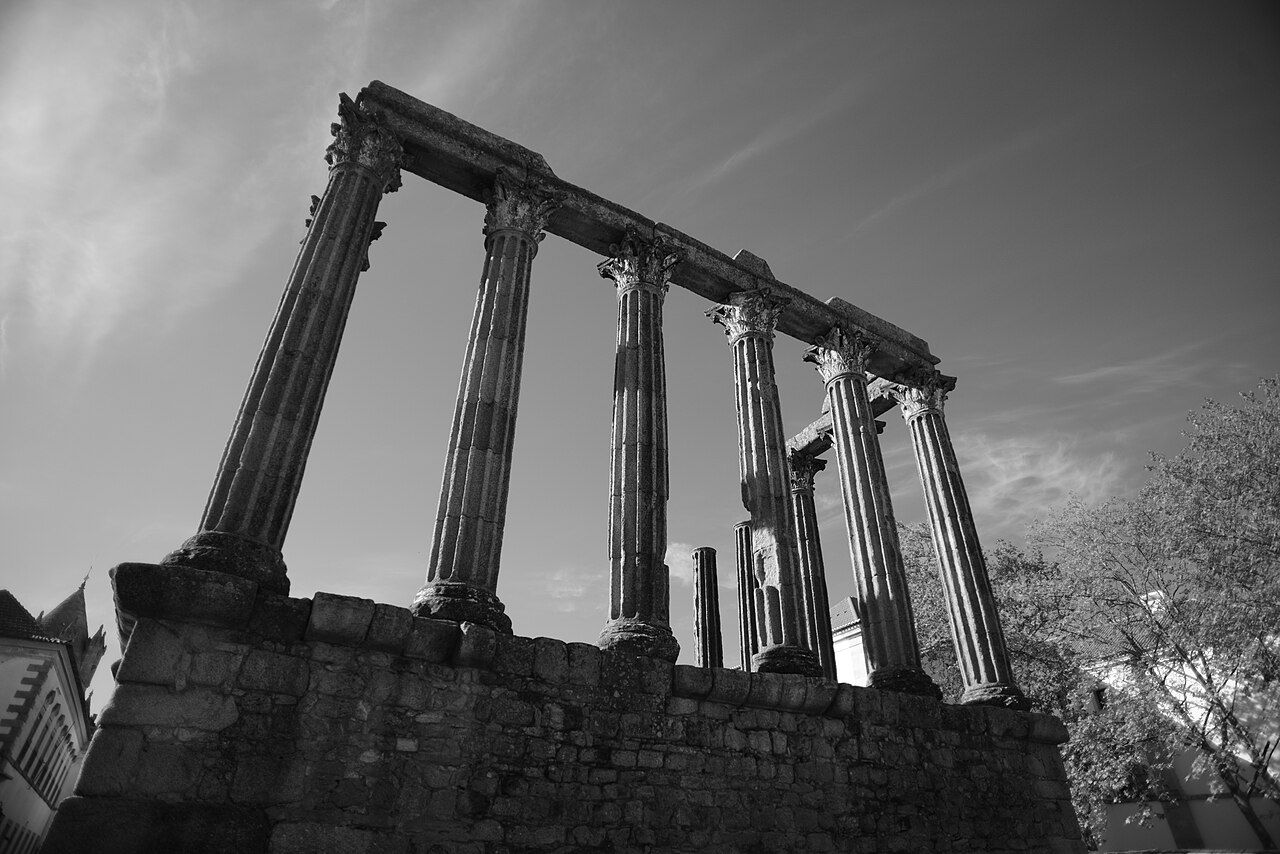
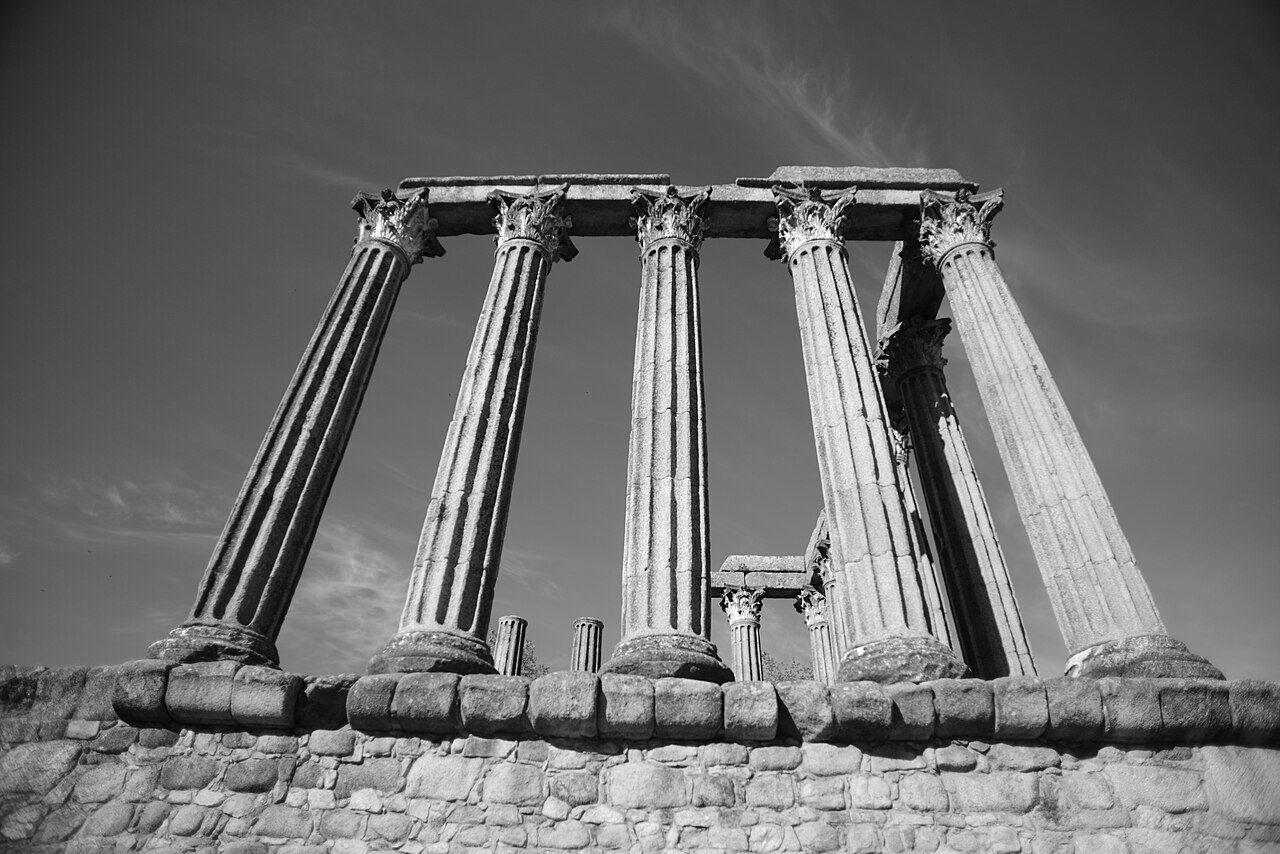
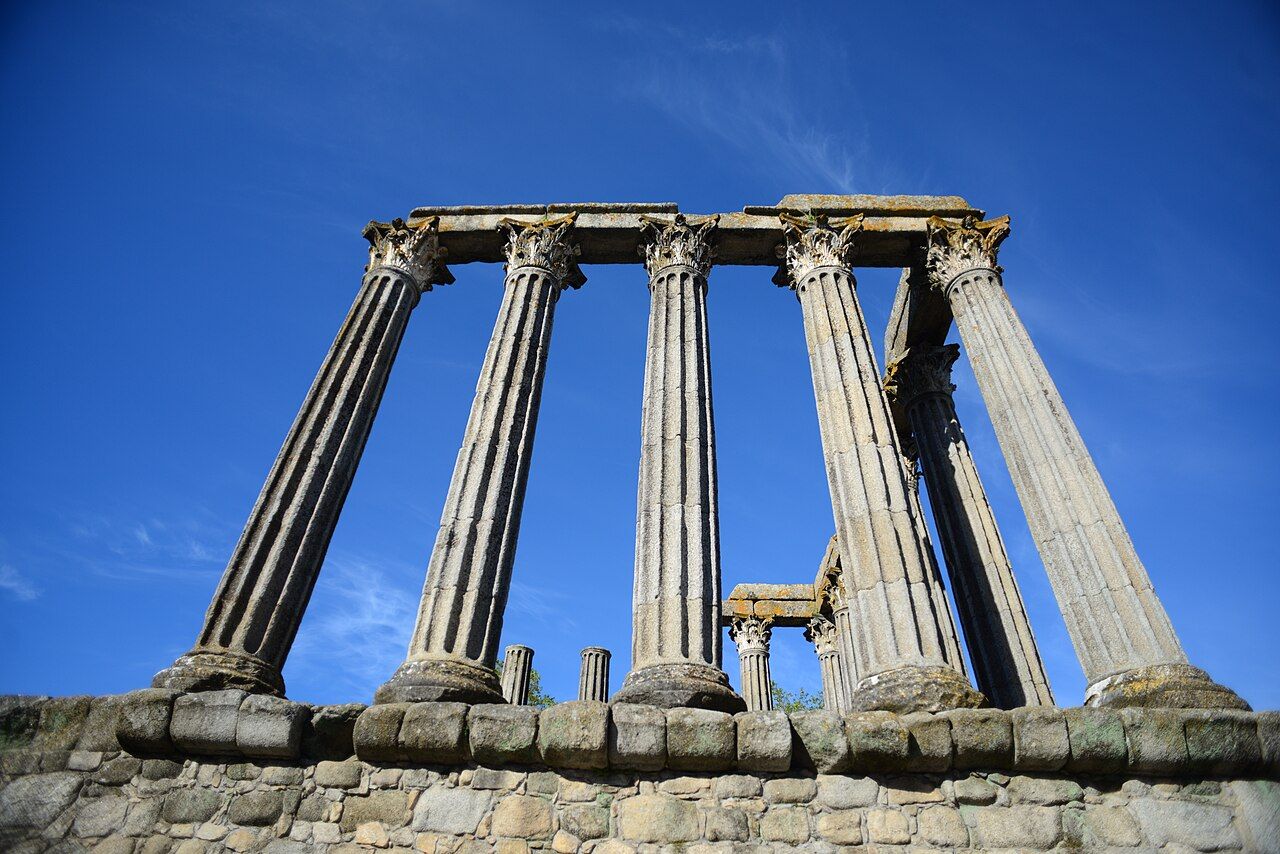
I would begin at the Roman Temple of Évora, where a row of Corinthian columns has remained from the temple dating from the 1st century AD. It is often called the Temple of Diana, though that name has no firm basis. I prefer the more careful name; there is no need to lend a place a story it cannot support. The columns are enough. The temple sits beside the Museu Nacional Frei Manuel do Cenáculo, so the museum is there as part of the same stretch of the city, rather than an excuse to take a separate journey.
From the temple, the cathedral is the natural next stop. The Sé de Évora’s main building work belongs to the 12th century and the 13th, in Romanesque and Gothic styles. Those are useful words to have in mind, but the roof is what makes the visit distinct: visitors can walk on it, with views over the city. I would choose that over another hurried circuit of streets. From above, the old centre and its roofs read as a whole, and the walk on foot suddenly has its own shape.
The 16th-century Água de Prata aqueduct brings water into the city. It belongs in the wider picture of Évora, even if I would not turn the day into a hunt for a list of monuments. The Roman temple, cathedral and aqueduct make different claims on attention: one holds a row of ancient columns, one invites a climb onto its roof, and one carries water into the city. I like that they are not interchangeable. A good day here has room for that difference.
Évora is best understood on foot, with its history arriving in layers rather than as a checklist.
The square and the Chapel of Bones
Praça do Giraldo is the main square and a sensible place to let the route pause. Its name comes from Gerald the Fearless, who took Évora in 1165. I like a square better when its name opens a small door into the city’s past, rather than pretending the past is safely over. The square gives the day a centre of its own: after the temple and cathedral, it is a place to stop moving for a while before going on to São Francisco.
The Capela dos Ossos is the visit I would give the most room, not because it is the easiest sight to admire but because it is the least possible to skim. Its walls, lined with bones and skulls, are direct in a way that the grander buildings are not. The inscription above the entrance makes that directness unmistakable. I would not rush from it straight to another monument; the contrast with the open square is part of what makes this route work. One place confronts, the other gathers the city around it.
The University of Évora was founded by the Jesuits in 1559. It adds another strand to the centre’s long history, alongside the Roman remains, the cathedral and the aqueduct. I would keep it in mind as part of the walk, rather than trying to make every landmark a separate, equal-sized chapter. Évora does not need that sort of over-explanation. The old walls hold the centre together, and the short distances let the stories sit beside one another without much arranging.
Making the day work
For a day trip, I would keep the route simple: the Roman temple and the museum beside it, the cathedral roof, Praça do Giraldo, then the Capela dos Ossos at São Francisco, leaving room to take the streets between them at walking pace. This is a compact historic centre, and walking is the straightforward way to cover it. The Cromeleque dos Almendres, a large stone circle, lies in the countryside west of the city; I would treat it as a separate thought rather than squeeze it into this city-centre walk.
Évora lies roughly an hour west of Alandroal by car. For another way to make the journey, see the train to Évora. For the drive, the route is covered separately.
The practical advantage once in the centre is clear enough: old walls ring a place that is easy to cover on foot. I would not try to make the day longer by collecting every possible stop. The better plan is to let the monuments keep their differences, and leave a little space between them.
For me, Évora is at its best when the walking is the plan, not the gap between plans.
Photos by Ingo Mehling, CC BY-SA 4.0; Carlos Vieira Romão, CC BY-SA 4.0