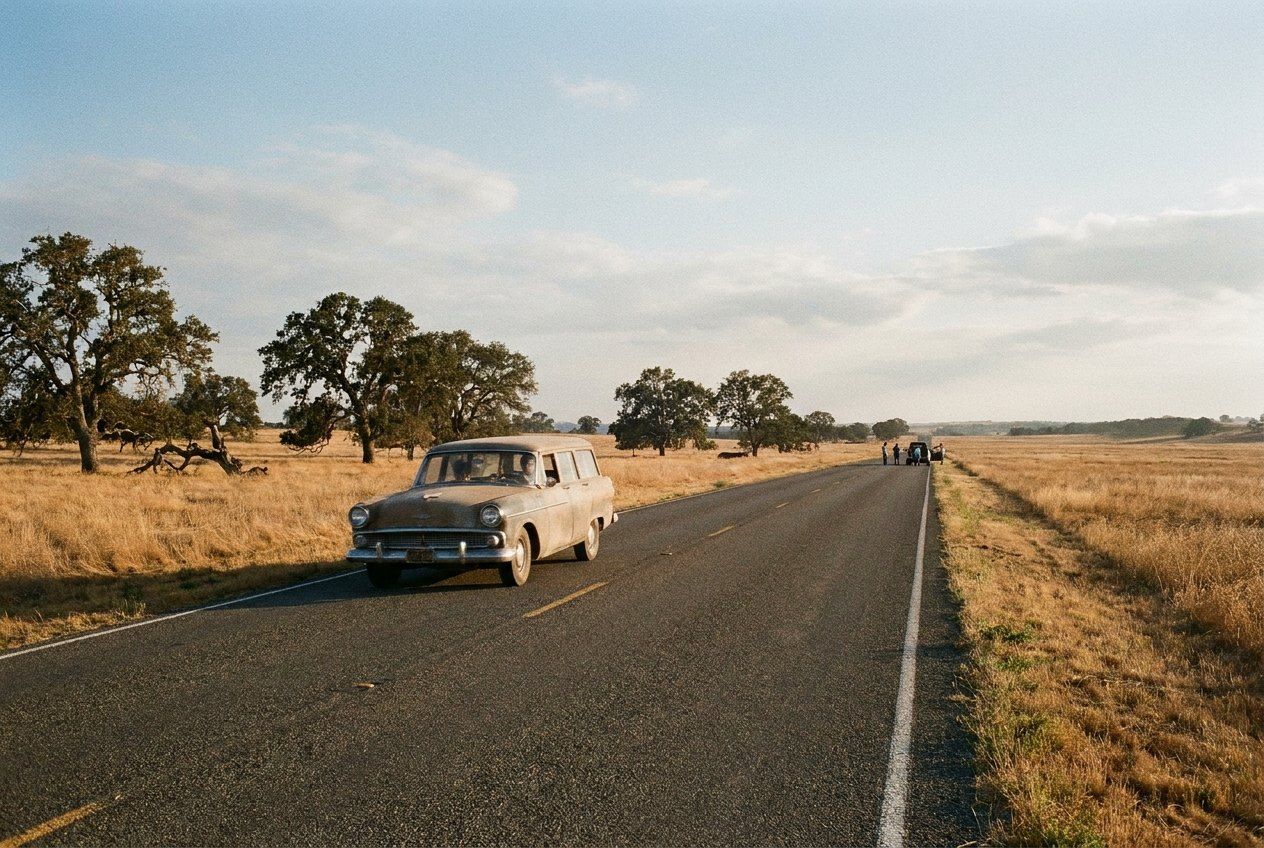
I count steps when I’m walking; on a drive across the plain, I find myself counting the long straight stretches instead. It is a different sort of journey from the stop-start business of a city, and that suits me. Most visitors to the inland Alentejo get around by car, because public transport is thin. Here are the routes and distances that make the first decisions easier.
How do I drive from Lisbon to Alandroal?
Take the A6 east from Lisbon. It runs past Évora and Estremoz towards Elvas and the Spanish border, and the drive to Alandroal takes about two hours. The useful turn is at Borba: leave the motorway there and take the road south through Vila Viçosa to Alandroal. It is a straightforward route to hold in your head, which I prefer to a sequence of small turns and village names.
The A6 is a toll motorway, with toll booths along the route. That is the main detail to factor into the drive. Lisbon airport is the main gateway for visitors arriving by air, and from there the road east is the natural line towards Alandroal.
What about coming from Spain?
The A6 runs towards Elvas and the Spanish border, so it is the main road to orient yourself around from that side, too. From the border, follow the A6 towards Borba, then take the road south through Vila Viçosa to Alandroal. There is also a small airport at Badajoz in Spain. The useful thing about this route is that it brings you to the same junction and southbound road as the drive from Lisbon; no need to make the geography more complicated than it is.
What are the roads between towns like?
Quiet, with long straight stretches across the plain. I like that more than a route that keeps demanding attention every few minutes. The distance can feel spacious, and the driving itself is generally uncomplicated: the towns and villages are linked by roads without the crowded, stop-and-start feel of a city. Fuel stations are mainly in the larger towns, so I would keep that in mind when deciding where to pause rather than assuming every village has one.
In walled villages such as Monsaraz, cars are left outside the walls. That is a useful distinction: the car gets you between places, but it does not necessarily belong in the middle of every old settlement. I’d rather leave it outside and walk in than try to force a drive where the village has already made its preference clear.
How far are Évora and Elvas?
Évora is roughly an hour from Alandroal by car, and Elvas about forty minutes. Those are handy distances to know when putting together a day on the road, without turning every visit into a long expedition. I’d use Alandroal as the starting point and decide which direction appeals more: towards Évora, or towards Elvas and the border.
Can I manage without a car?
It is possible to look at the region through buses and trains, but public transport is thin and most visitors get around by car. For travel between Alandroal and the surrounding towns and villages, a car makes the simplest plan. Without a car, expectations about how easily the places fit together should stay modest; the distances may be short, but the car does much of the connecting.
My preference is clear: drive the stretches between towns, then leave the car where the village asks you to. The roads are straight; parking, at least in Monsaraz, has the last word.
Photos by Tiago Miranda from Valongo, Portugal, CC BY 2.0; Ingo Mehling, CC BY-SA 4.0