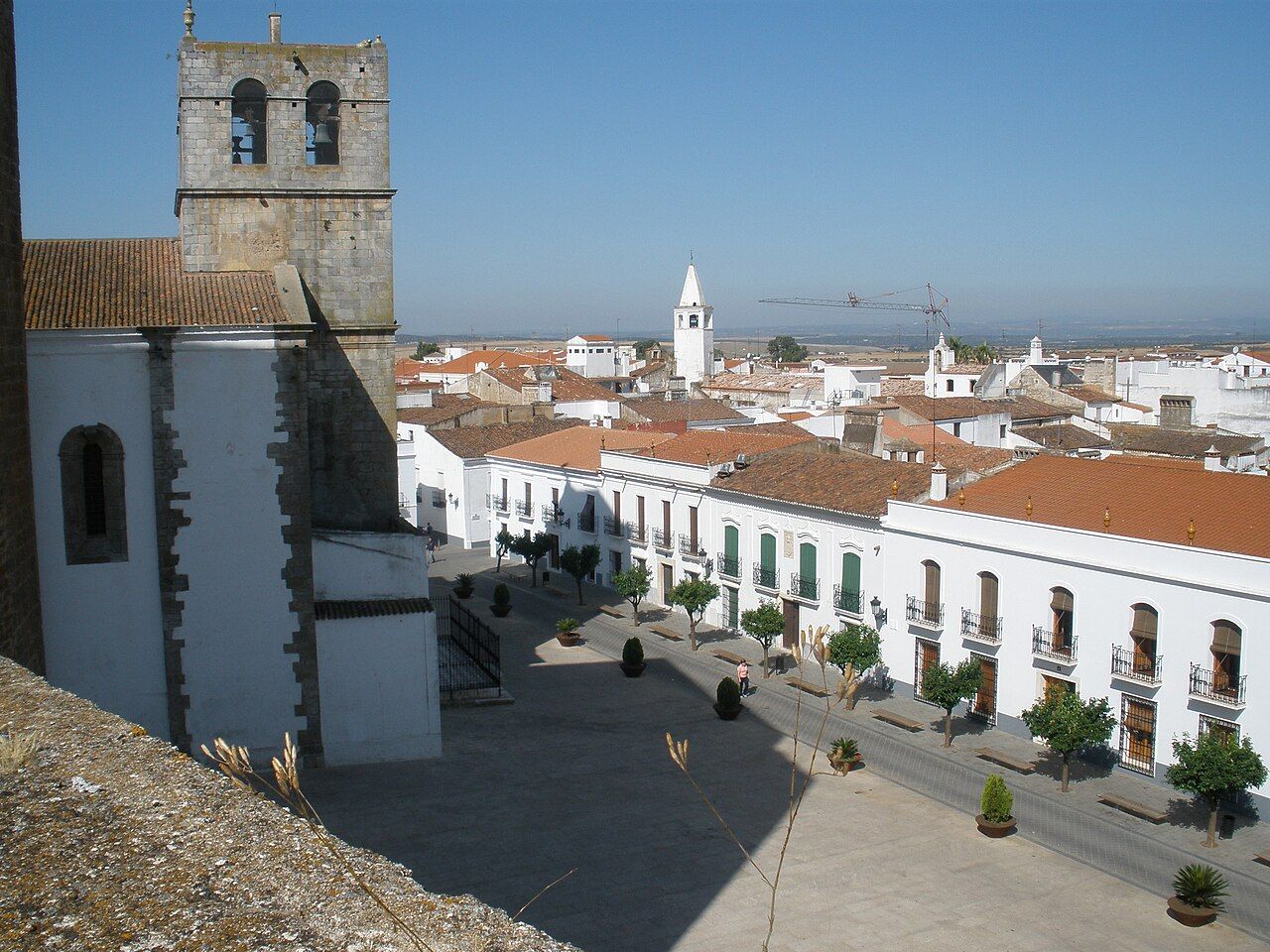
I have a habit of counting steps. In Olivenza, I find myself counting dates instead. The town’s story keeps returning to the question of who it belongs to: Portugal, which received it in a medieval treaty and has never formally recognised Spanish sovereignty over it, or Spain, which has held it since the War of the Oranges. The answer on the map is clear. The older argument is not.
Olivenza, or Olivença in Portuguese, stands on the left bank of the Guadiana, across the river from Elvas and Juromenha. The Treaty of Alcañices in 1297 gave the town to Portugal. It remained Portuguese until Spain occupied it in 1801 during the War of the Oranges. The Treaty of Badajoz, also in 1801, left it in Spanish hands. Then, in 1815, the Congress of Vienna called for its return to Portugal. Spain kept the town, and Portugal has never formally accepted that Spanish sovereignty is settled.
A border can be settled on a map and remain unsettled in the mind.
A border can be settled on a map and remain unsettled in the mind.
That is the tension I find most compelling here: not a grand display of dispute, but a town whose everyday details carry more than one history. Today Olivenza is in the Spanish province of Badajoz, in Extremadura. Many of its street signs are in both Spanish and Portuguese. The two languages share the signboard without making the town’s past any simpler. I like this kind of evidence best: ordinary, unforced, and hard to mistake for a decorative gesture.
Portuguese traces
The Church of Santa María Magdalena is built in the Manueline style. Inside, twisted stone columns give the building a strong, distinctive presence; they are the detail I would look for first. The church is not a footnote to the political story, but one of the clearest ways the town’s Portuguese past remains visible. There is also a tall medieval keep rising over the castle. Between the keep, the church and those bilingual signs, Olivenza does not read as a place whose history can be tidied into a single national label.
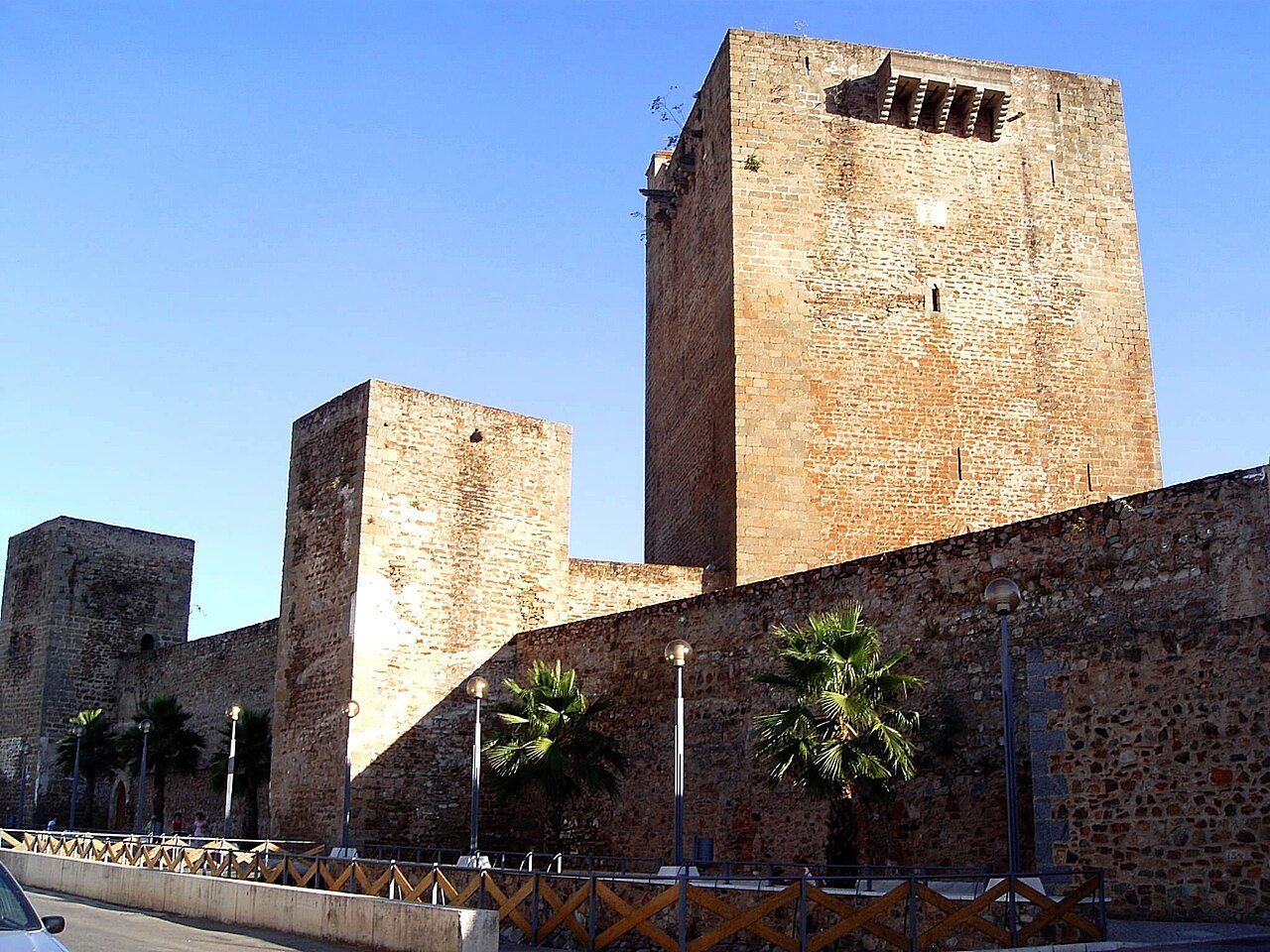

That is not the same as saying every trace settles the question. It doesn’t. The Treaty of Alcañices, the occupation in 1801, the Treaty of Badajoz and the Congress of Vienna tell a story of changing power; the church and signs tell a story that survives those changes. I prefer the second kind of trace, not because it answers the argument, but because it makes the argument feel part of the town rather than something kept at a distance in a history book.
Across the river, Elvas gives the border its other point of reference, while Juromenha faces Olivenza from the same stretch of the Guadiana. the fort at Juromenha belongs naturally in this landscape of close neighbours and long political lines: the river is a boundary, but it is also the thing that draws these places into the same view. For more on the human side of that proximity, I would put this story alongside life along the border.
Across the Guadiana
The old Ponte da Ajuda once carried a crossing over the Guadiana. Its construction dates to the opening years of the 16th century; it was destroyed in 1709. Its ruined remains now sit near a modern road bridge, which links Elvas and Olivenza. I find the contrast more telling than a neat reconstruction would be: the old bridge is part of the record, while the modern one does the practical work. The river has not stopped being a border, but it is not an obstacle to making the crossing.
From Alandroal, Olivenza is about 50 km away, under an hour by car via Elvas. The route makes sense on the ground as well as on the map: the town is across the Guadiana from Elvas, and the modern road bridge links them. Portugal and Spain are both in the Schengen area, so there are no routine border controls. There is one small practical wrinkle worth keeping in mind: Spain is one hour ahead of Portugal, and the clocks change when crossing the border.
Olivenza is Spanish today, Portuguese in its older inheritance, and still disputed in Portugal’s view of sovereignty. I would not try to flatten those facts into a tidy verdict. The better reason to come is that the town makes the border legible in stone, language and geography, without pretending the history has ended. I count the dates; the town leaves the argument open.
Photos by Diego Delso, CC BY-SA 4.0; Alvesgaspar, CC BY-SA 4.0